
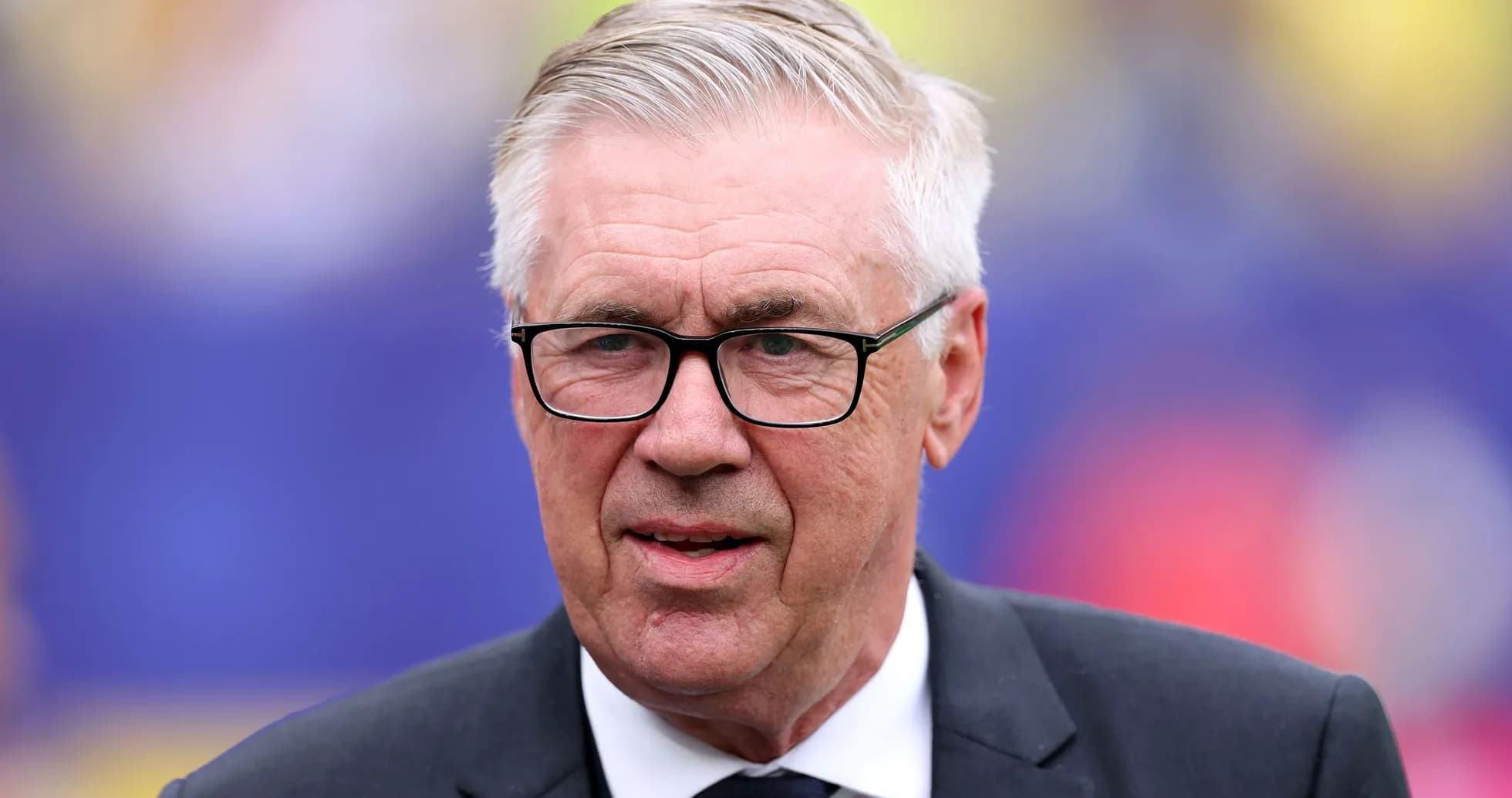
Ancelotti's Bold Rebuild of Brazil's National Team
Carlo Ancelotti has ripped up the old Brazil blueprint and started again.
Months after a bruising World Cup exit in the round of 16 to Norway, the Italy-born coach has delivered on his promise of a reset, naming a strikingly young squad for friendlies against Australia and India and leaving several of the national team’s biggest names at home.
A ruthless reset
The headline omission is Alisson. Brazil’s long-time No. 1 and Liverpool stalwart is out, as are seasoned midfield anchors Casemiro and Fabinho. Neymar, who recently called time on his international career, is also missing, leaving the squad without its defining figure of the last decade.
This is not a half-measure. It is a clear break.
Ancelotti had vowed change in the immediate aftermath of that shock defeat to Norway, a result that sent Brazil out of the World Cup far earlier than expected. He has now followed through, building a group heavily tilted towards players eligible for the 2028 Olympic Games and, in his mind, forming the backbone of a new core for the 2030 World Cup.
The disappointment still burns. Ancelotti has been open about how much the failure on the biggest stage has weighed on him.
“The World Cup was a disappointment for us and for me personally,” he told ESPN. “The pain of the defeat lingers much longer. Now, however, we are motivated by the fact that we have time to prepare for a new cycle and get ready for the upcoming competitions.”
The new cycle starts now, not in qualifying, not at the next Copa America. With this list.
Alisson out, new goalkeepers in
The most symbolic shift comes in goal. Ancelotti has completely turned over his goalkeeping options, calling up Hugo Souza, Pedro Morisco and Otavio and leaving Alisson out of the squad altogether.
He insists this is not a permanent exile, but a strategic pause.
“We know Alisson very well, and when the competitions, like the Copa America, come, if he remains being the best goalkeeper in Brazil, Alisson will play,” Ancelotti said. “Right now, however, we have to prioritise the younger ones.”
That line captures the entire philosophy of this selection: respect for the old guard, but a clear priority given to development and long-term planning.
Youth first, with a spine of stars
This is not a kids-only experiment, though. Ancelotti has kept a thin but important layer of high-level experience to steady the project.
Vinicius Junior, fresh from another stellar season with Real Madrid, is in and will be one of the faces of this new Brazil. Barcelona winger Raphinha joins him in attack, while Chelsea forward Joao Pedro returns after missing the World Cup, eager to stake his claim in a new hierarchy.
At the back, Paris Saint-Germain captain Marquinhos remains, a natural reference point for a young defensive unit. In midfield, new Arsenal signing Bruno Guimaraes stays on as a key organiser and leader.
“I chose these players to help with this change in direction,” Ancelotti explained. “They are crucial for the future and will help the younger players improve. One thing is certain: a player who is 34 or 35 years old isn’t the future; they are the present. If a player of that age is ready to play in a major tournament, they will be in the national squad.”
The message is blunt. Age will not disqualify anyone from a major tournament, but the day-to-day work between now and then will revolve around those who can still grow into 2030.
The new Brazil, line by line
The squad list underlines just how deep Ancelotti has gone with this rebuild.
- Goalkeepers: Hugo Souza, Pedro Morisco, Otavio.
- Defenders: Arthur Dias, Wesley, Marquinhos, Gabriel Magalhaes, Douglas Santos, Jair, Matheuzinho, Maurio Junior, Vitor Reis.
- Midfielders: Bruno Guimaraes, Andrey Santos, Danilo Santos, Douglas Luiz, Breno Bidon, Gabriel Bontempo.
- Forwards: Endrick, Joao Pedro, Estevao, Pedro, Raphinha, Rayan, Samuel Lino, Vinicius Junior.
Names like Endrick and Estevao signal a deliberate bet on the next wave of Brazilian attacking talent. Gabriel Magalhaes brings Premier League steel to a back line that will lean heavily on Marquinhos’ authority. Andrey Santos and Douglas Luiz add legs and range in midfield around Bruno Guimaraes’ passing brain.
It is a squad built as much for 2028 and 2030 as for the next two months.
Australia, then a historic first in India
The first test of this new-look Brazil comes far from home. The Selecao head to Australia for a double-header of friendlies, facing the Socceroos in Townsville on September 25 before a second meeting in Brisbane four days later.
Those games will offer Ancelotti a controlled environment to experiment, to see how his young core copes with travel, expectation and the physical edge of a seasoned Australia side.
Then comes a landmark moment.
On October 3, Brazil will travel to Kolkata for their first ever match in India. For a country that has followed the five-time world champions from afar for generations, it is a long-awaited arrival. For Brazil, it is another step in a new journey, in front of millions of fans who have only ever known them through television screens and stories.
Ancelotti has his fresh cycle. The question now is simple: can this bold, youthful Brazil grow quickly enough to turn World Cup pain into the foundation of a new era?
Related News
Atlético Madrid's Bold Promise to Julián Álvarez
Liverpool Eyes Rayan as £130m Release Clause Approaches
Arsenal and Liverpool Battle for Bournemouth Starlet Rayan
Ajax Embraces Míchel's Style with Impressive Transformation
Anthony Martial's Potential Return to LaLiga with Málaga
Manchester United Faces Drama in Carabao Cup Tie Against Brighton