
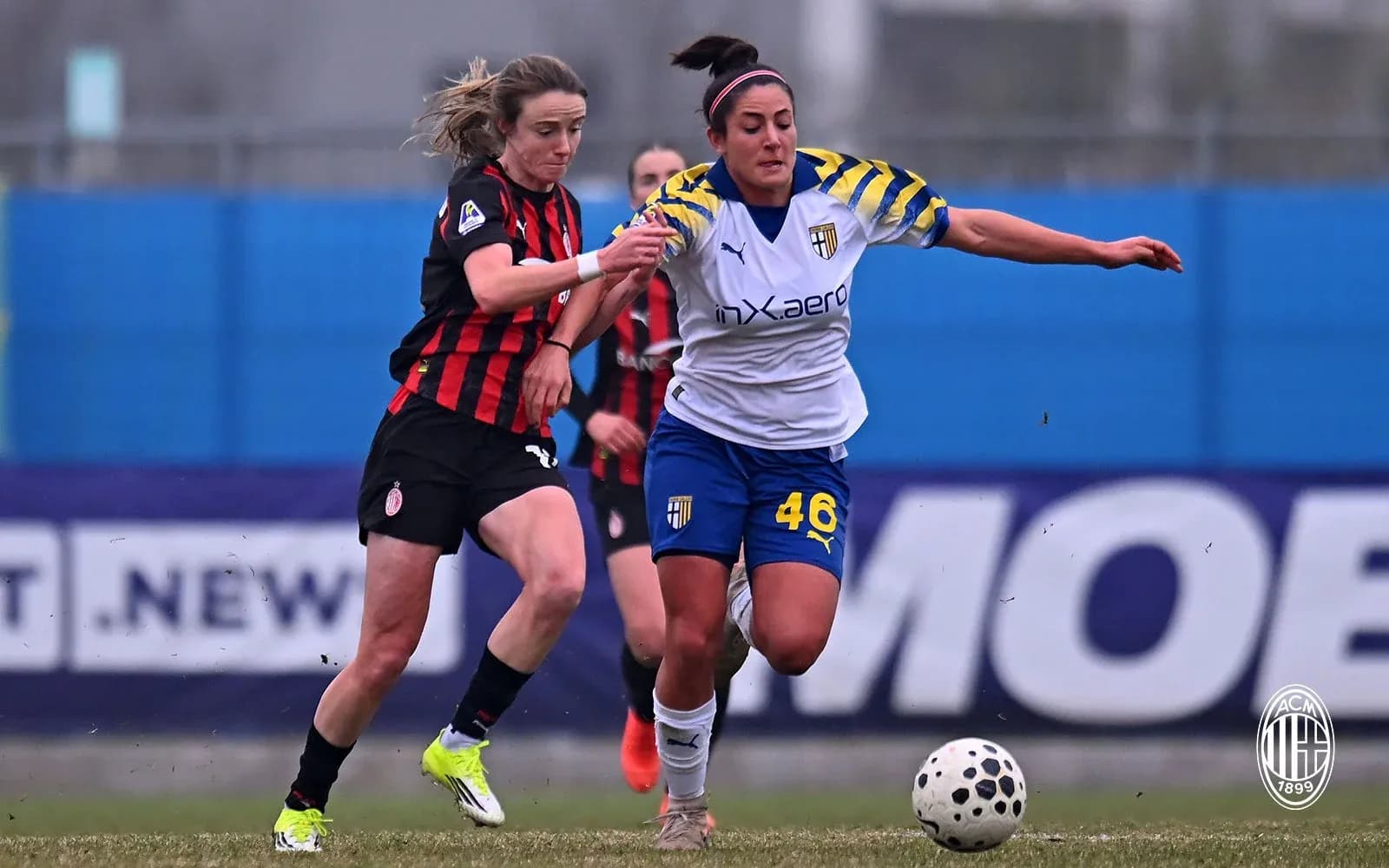
AC Milan W vs Parma W: Serie A Women Match Analysis
On a bright afternoon at Centro Sportivo Peppino Vismara, AC Milan W closed out a demanding stretch of the Serie A Women regular season with a 3–1 win over Parma W, a result that crystallised the contrasting identities of these two sides. Following this result, Milan sit 6th with 32 points and a goal difference of 6, while Parma remain 10th on 16 points with a goal difference of -13. Over 21 league matches, Milan’s overall record of 9 wins, 5 draws and 7 defeats has been built on a balanced scoring profile: 31 goals for and 25 against. Parma’s survival fight, by contrast, is rooted in resilience more than cutting edge, with just 2 wins in 21 but 10 draws keeping them afloat despite scoring only 15 and conceding 28.
I. The Big Picture – How the squads fit the season’s story
At home this campaign, Milan have been solid rather than spectacular: 5 wins, 3 draws and 3 defeats from 11, with 18 goals for and 15 against. Their home averages of 1.6 goals scored and 1.4 conceded per match underline a side that is willing to trade chances but usually keeps its nose in front. The 3–1 scoreline here fits that pattern: Milan’s attack did enough to stretch a visiting defence that has struggled away from home all season.
On their travels, Parma’s numbers explain much of what unfolded. Away from home they have yet to win in 11 attempts, with 0 wins, 5 draws and 6 defeats, scoring only 2 goals and conceding 14. An away scoring average of 0.2 against 1.3 conceded is the profile of a team that defends deep, clings to structure and hopes to escape with a point. Holding Milan 1–1 at half-time suggested that script might repeat, but the second half exposed the limits of that approach when chasing the game.
II. Tactical Voids and Discipline – Who was missing, who walked the line
There were no listed absences in the pre-match data, leaving both coaches close to full choice. Suzanne Bakker’s Milan XI reflected her season-long preference for a back four and midfield control, even if the exact formation is not logged for this specific fixture. The presence of Milicia Keijzer, A. Soffia and K. De Sanders in the starting defensive line gave Milan a familiar spine in front of goalkeeper L. Giuliani, with C. Grimshaw and M. Mascarello anchoring the midfield.
Giovanni Valenti’s Parma stayed loyal to their three-at-the-back identity that has defined their season (with 3-4-2-1 the most-used shape), starting D. Cox and C. Ambrosi in the defensive unit and building a combative midfield around M. Uffren and C. Prugna. That choice was consistent with a side that often prioritises compactness and counter-attacks.
Discipline has been a running subplot for both teams. Across the season, Milan’s yellow-card timing reveals a clear late-game edge: 31.58% of their cautions arrive between 76–90 minutes, a sign of a side that pushes intensity into the closing stages and occasionally pays for it. Their red cards are spread evenly, with 33.33% of dismissals in each of the 46–60, 61–75 and 76–90 ranges, underlining that their aggression can boil over at any phase of the second half.
Parma’s card profile is even more skewed towards late tension. A league-high 29.17% of their yellows also fall in the 76–90 window, and their only red of the campaign has come in that same range (100.00% of their reds). In a match that finished 3–1 after a 1–1 half-time score, that tendency speaks to mental and physical fatigue when they are forced to defend deeper and longer.
From an individual standpoint, M. Uffren is the walking embodiment of Parma’s edge. With 7 yellow cards in 19 appearances and 24 fouls committed, she is both their midfield shield and a disciplinary risk. She has also missed 1 penalty this season, so Parma cannot lean on her from the spot as a guaranteed solution. For Milan, Mascarello’s 4 yellows and robust duel numbers show why she is often the one tasked with breaking up play – and why referees keep a close eye on her.
III. Key Matchups – Hunter vs Shield, and the Engine Room
The “Hunter vs Shield” battle here was less about a classic centre-forward duel and more about Milan’s creative midfielders and wide attackers working collectively against Parma’s away defensive record. Milan’s overall scoring average of 1.5 goals per game, driven in part by the league’s joint-top red-carded scorer K. van Dooren (5 goals) and the direct threat of C. Dompig, was always likely to test a Parma back line conceding 1.3 goals per away match.
Even though van Dooren started on the bench, her season profile matters to the narrative: 18 shots, 12 on target and 5 goals point to a midfielder who attacks the box with purpose. Her red card earlier in the campaign is a reminder that she plays on the edge, but it is that same edge that makes Milan dangerous when they tilt the game into the opponent’s half.
Parma’s “shield” was built around the trio of Cox, Ambrosi and the screening of Uffren. Cox’s presence in the starting XI symbolised the aerial and positional discipline Parma rely on in their 3-4-2-1 variants. Yet with Parma having failed to score in 9 of 11 away matches, any concession against a side as fluid as Milan was always going to be hard to overturn.
The engine room duel was particularly compelling. For Milan, Grimshaw and Mascarello form a complementary pair: Grimshaw, with 2 assists and 11 key passes this season, is the line-breaker, while Mascarello’s 15 key passes and 368 completed passes give Milan tempo and circulation. Their ability to connect defence to attack is one reason Milan have produced 7 clean sheets overall while still maintaining a positive attacking output.
Opposite them, Uffren and Distefano tried to tilt the pitch for Parma. Uffren’s 512 completed passes at 82% accuracy and 32 tackles show a two-way midfielder who can both build and destroy. Distefano, listed among the league’s top assist providers with 2 assists and 16 key passes, is Parma’s most important transition weapon. Her 151 duels with 81 won, plus 50 fouls drawn, underline a player who carries the ball into contact, wins territory and free-kicks. In this match, though, that engine room was overworked; as Milan grew into the second half, the spaces around Uffren widened and the visitors’ structure began to crack.
IV. Statistical Prognosis – What this result tells us about their trajectories
Following this result, the numbers reinforce the sense that Milan are trending towards the upper-middle of Serie A Women, while Parma are locked in a survival grind. Milan’s overall goal difference of 6 (31 scored, 25 conceded) reflects a side whose attacking and defensive metrics are in harmony. Their 7 clean sheets and 7 matches failing to score show a team that can both shut down opponents and, occasionally, run dry – but against sides with Parma’s away profile, their ceiling is clearly higher.
Parma’s overall goal difference of -13 (15 scored, 28 conceded) is harsher than their points tally suggests, but the away scoring average of 0.2 and 11 total matches without scoring are stark warnings. Without a reliable finisher and with their key creators like Distefano often starting far from goal, their Expected Goals profile would almost certainly lag behind Milan’s. Even without explicit xG values, the shot volume, key passes and goals data point to Milan generating higher-quality and more frequent chances.
In tactical terms, this 3–1 confirms that when Milan can impose their midfield and bring their creative pieces – Grimshaw, Dompig, van Dooren off the bench – into advanced pockets, they overwhelm teams that rely solely on compactness. Parma’s defensive solidity can still grind out draws, especially at home, but on their travels they need either a sharper edge from Distefano in the final third or a more adventurous structure from Valenti.
As the season moves into its decisive phase, Milan’s squad looks built to push higher: flexible back four options, a midfield that can both create and compete, and multiple attacking profiles. Parma’s path is narrower: they must keep games tight, lean on Uffren’s leadership and Distefano’s transitions, and hope their defensive block can carry them over the line. This match, and the numbers around it, suggest that when Milan play with this level of control and aggression, the gap between 6th and 10th in Serie A Women feels every bit as large as the table implies.
Related News

Roma W Dominates Genoa W in Serie A Women's Season Finale

Ternana W's Resilient Victory Over AC Milan W in Serie A Women

Juventus Dominates Parma 3–1 in Serie A Women Clash
Napoli W vs Sassuolo W: A Tale of Two Contrasting Teams

Fiorentina W vs Lazio W: A Tactical Analysis of Serie A Women's Clash

Como W Shock Inter Milano W with 3–0 Victory