
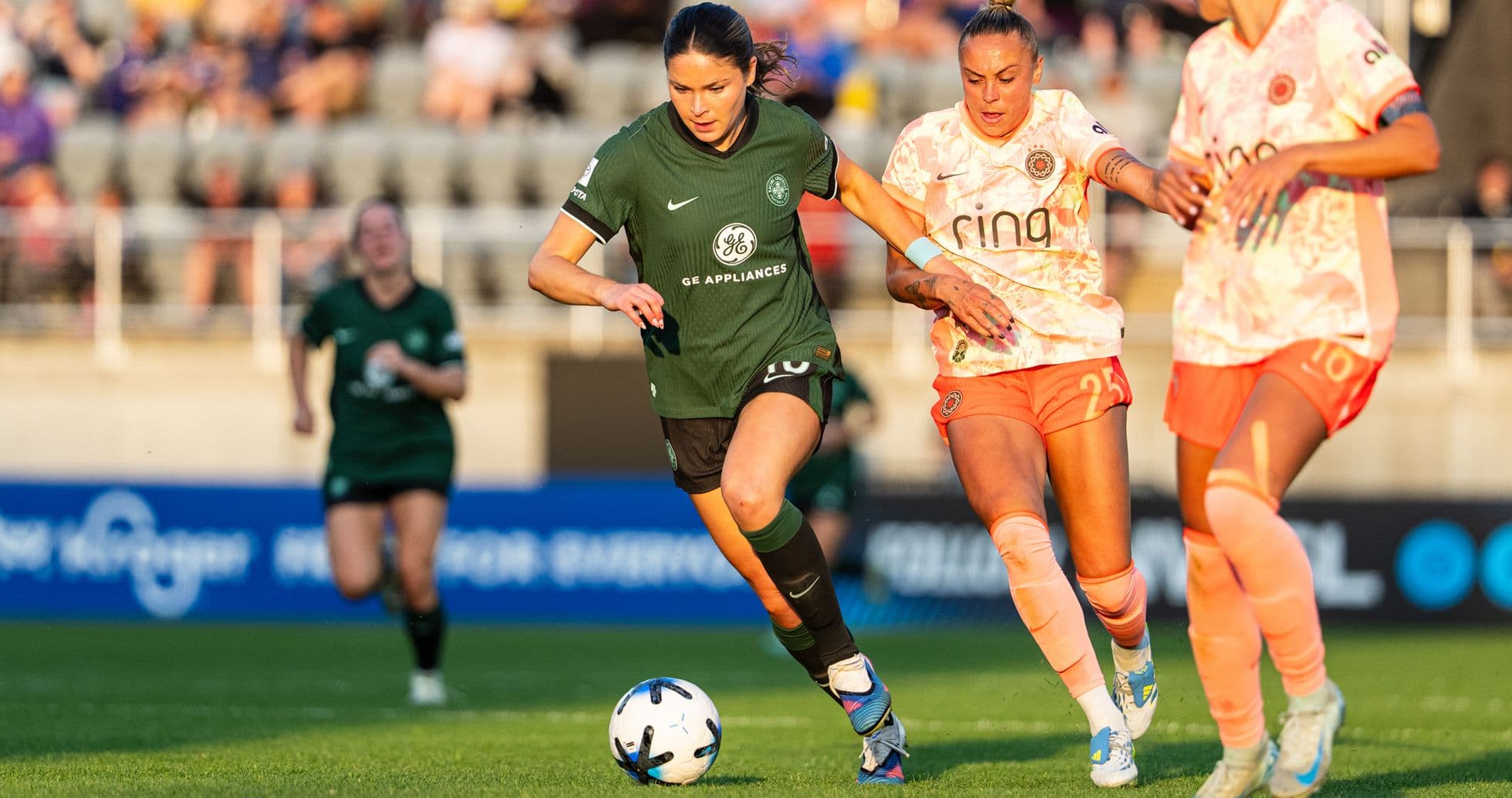
Utah Royals W vs Racing Louisville W: Tactical Analysis of NWSL Clash
Under the lights at America First Field, Utah Royals W and Racing Louisville W met in a Group Stage clash that felt anything but routine. By the final whistle, the scoreboard read 2–1 to Utah, a result that neatly mirrored the arc of their seasons so far: a ruthless, efficient contender at home against a fragile, adventurous side that still cannot translate promise into points on their travels.
Following this result, Utah remain very much the standard-setters in this NWSL Women campaign. Their overall record of 6 wins, 2 draws and 2 defeats from 10 matches is underpinned by a clear identity: control through structure, then incision in the final third. They have scored 14 goals overall and conceded 7, a goal difference of 7 that matches the table data exactly. At home, they have been particularly clinical, with 6 goals for and 3 against across 4 fixtures, averaging 1.5 goals for and 0.8 against at America First Field. Racing Louisville, by contrast, continue to live with a stark split personality: competitive at home, but on their travels they have now lost all 6 away games, scoring 6 and conceding 12, an away average of 1.0 goal for and 2.0 against.
I. The Big Picture – Systems and Structure
Both coaches leaned into a mirrored 4-2-3-1, but the shapes behaved very differently over the 90 minutes.
Jimmy Coenraets set Utah up with M. McGlynn as the anchor in goal and a back four of J. Thomsen, K. Del Fava, K. Riehl and N. Rabano. Ahead of them, the double pivot of N. Miura and A. Tejada Jimenez gave Utah a stable spine: Miura as the metronome, Tejada Jimenez as the more combative, line-stepping presence. The attacking trio of P. Cronin, Minami Tanaka and C. Lacasse operated behind lone forward K. Palacios, but in practice it often resembled a 4-2-2-2, with Lacasse driving inside from the left and Tanaka drifting between the lines.
Beverly Yanez mirrored the formation but not the tempo. J. Bloomer started in goal behind a back four of L. Milliet, A. Wright, C. Petersen and Q. McMahon. The double pivot of T. Flint and K. O’Kane was designed to give Racing Louisville a platform to release E. Sears, M. Hodge and E. Hase in support of striker K. Fischer. On paper it offered balance; in reality, the distances between lines were too large, especially in defensive transition, and Utah repeatedly exploited the gaps.
II. Tactical Voids – Discipline and Hidden Risks
Injury absences are not flagged in the data, so both squads appeared close to full strength, but discipline and in-game risk management shaped the contest.
Heading into this game, Utah’s season-long card profile already hinted at a side that grows more aggressive as matches wear on: 27.78% of their yellow cards arrive between 61–75 minutes, with another 22.22% between 46–60 and a late spike of 16.67% from 76–90. There is also a notable red-card incident in the 76–90 range this season. That pattern speaks to a team willing to defend their advantage with a hard edge in the final third of games, and it was visible here as Utah dug in to protect their 2–1 lead.
Racing Louisville’s yellow-card distribution is more evenly spread but still telling. A quarter of their bookings come between 46–60 minutes and another 25.00% in the 91–105 range, underlining how their structure tends to fray immediately after half-time and again in late, stretched phases. Without any red cards this season, they are combative but not reckless; the problem is that their fouls often arrive in vulnerable areas, inviting pressure on a defence that already concedes 1.9 goals overall per match.
III. Key Matchups – Hunter vs Shield, Engine Room Battles
The headline duel was Utah’s attacking trident against Racing Louisville’s leaky away defence. C. Lacasse entered this fixture as one of the league’s most influential attackers: 3 goals and 2 assists overall, with 22 key passes and 9 shots on target from 9 attempts. Her work rate without the ball – 22 tackles, 1 blocked shot, 9 interceptions – also makes her the first line of Utah’s press. Against an away unit that had already shipped 12 goals on their travels, her inside-left roaming was always likely to be decisive, and Utah’s opening goal before half-time reflected that dynamic: quick circulation into the half-space, a direct run, and Racing’s back line unable to compress quickly enough.
Behind Lacasse, Minami Tanaka was the conductor in the “engine room.” With 3 assists and 2 goals this season, plus 213 passes at 72% accuracy, she is Utah’s chief connector between the pivot and the front line. Her tendency to drop into pockets between Racing’s midfield and defence repeatedly pulled T. Flint and K. O’Kane out of shape. Once they stepped, space opened for Cronin and Palacios to run beyond.
On the other side, Racing Louisville’s attacking hope rested on E. Sears and K. Fischer. Sears, with 3 assists and 1 goal overall, is a hard-running creator who also defends aggressively – 16 tackles and 11 interceptions show her willingness to work back. Fischer brings 2 goals and 2 assists, 13 key passes and a relentless duel volume (115 total, 49 won). Their combination did carve out moments of promise, particularly when Racing could break Utah’s initial press and find Fischer between the lines. The visitors’ lone goal owed much to that pattern: Sears dropping off the right, Fischer attacking the channel, and Utah’s full-backs briefly caught in two minds.
Yet Utah’s defensive shield held. A. Tejada Jimenez, one of the league’s most carded players with 3 yellows overall, again walked the line between aggression and risk. Her 18 tackles, 2 blocks and 10 interceptions this season underline her importance in front of the back four. Whenever Racing tried to play through central zones, Tejada Jimenez stepped in to disrupt, even if it meant conceding fouls to break rhythm.
The most intriguing micro-battle, though, came between Tanaka and Racing’s enforcer figure in midfield. T. Flint’s season numbers – 22 tackles, 12 blocked shots and 31 interceptions – mark her as one of the league’s premier ball-winners. Here, she was constantly asked to choose between tracking Tanaka’s movement and screening passing lanes into Palacios. Utah’s second goal grew from that tension: Tanaka found space between the lines, drew Flint out, and a quick vertical pass exposed the gap in front of Racing’s centre-backs.
IV. Statistical Prognosis – What the Numbers Say About These Sides
Even without explicit xG values, the season data sketches a clear expected-goals landscape. Utah’s overall scoring rate of 1.4 goals per match, combined with just 0.7 conceded, points to a team that consistently creates the better chances and concedes few high-quality opportunities. Their 5 clean sheets overall, plus only 1 match in which they failed to score, support the idea of a side that controls both boxes.
Racing Louisville, by contrast, profile as an open, chaotic team. They score 1.6 goals overall per match but concede 1.9, and have yet to keep a clean sheet. On their travels, that defensive fragility is magnified: 6 away defeats from 6, with 6 goals scored and 12 conceded, suggest that opponents regularly generate strong xG against them. Their attack is lively enough to keep them in games, but the structure behind it is too porous to sustain results.
Following this result, the tactical story of both squads feels reinforced rather than rewritten. Utah Royals W look every inch a playoff-calibre side: compact without the ball, layered in possession, and driven by the creative axis of Tanaka and Lacasse. Racing Louisville W remain a dangerous but flawed opponent, reliant on individual sparks from Sears and Fischer while their away defensive scheme continues to leak chances at critical moments.
If this match were to be replayed a hundred times under similar conditions, the underlying numbers and tactical patterns suggest Utah would dominate the xG battle more often than not – and, as they did here, find just enough quality in the final third to turn control into a narrow but deserved victory.
Related News
Orlando Pride W vs Portland Thorns W: Playoff Showdown
San Diego Wave W vs Kansas City W Predicted Lineups: Team News for NWSL Women
Orlando Pride W vs Portland Thorns W Prediction: Key Stats and Betting Tips
San Diego Wave W vs Kansas City W: Key NWSL Clash Preview
San Diego Wave W vs Kansas City W Prediction: Key Stats and Betting Tips
Portland Thorns and Chicago Red Stars Draw in NWSL Showdown