
Udinese vs Cremonese: Tactical Analysis of Serie A Clash
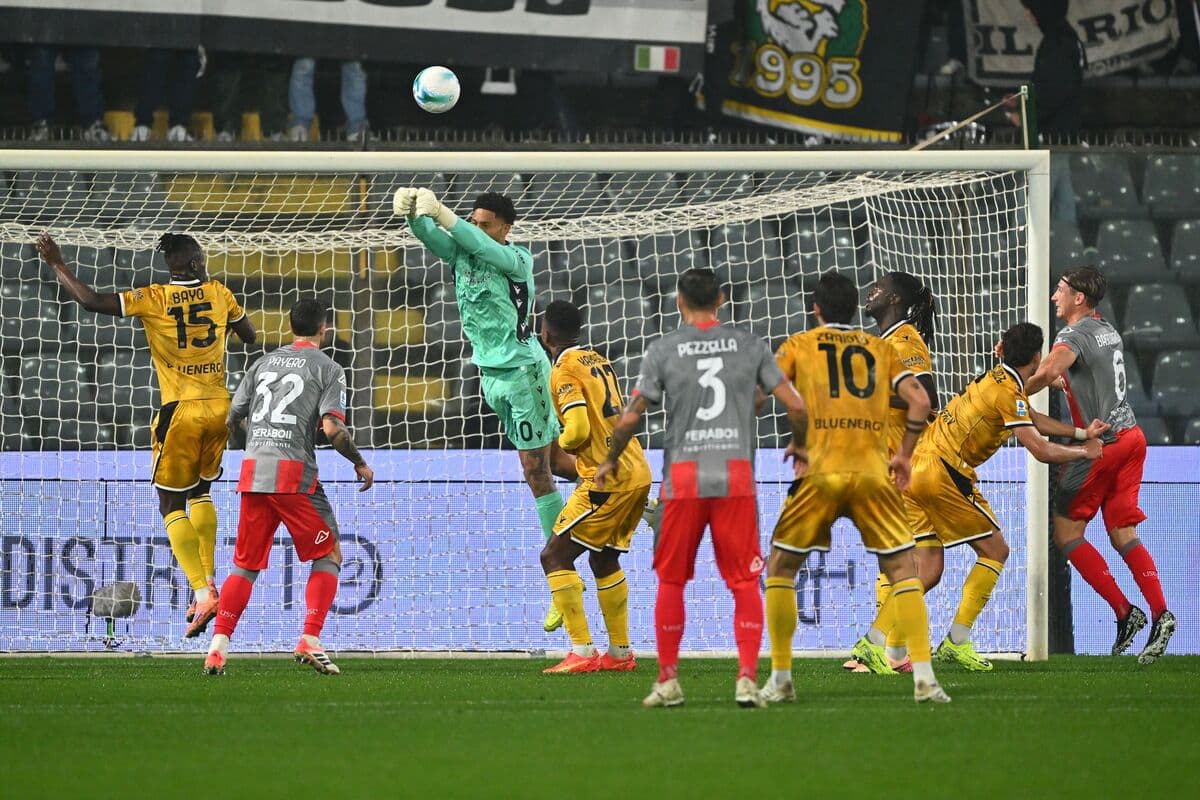
The lights have long since dimmed at the Bluenergy Stadium – Stadio Friuli, but the story of this match lingers in the numbers and the shapes left on the grass. Udinese, 10th in Serie A heading into this game with 50 points and a goal difference of -2 (45 scored, 47 conceded in total this campaign), fell 0–1 at home to an 18th‑placed Cremonese side fighting for survival with 34 points and a total goal difference of -22 (31 for, 53 against). On paper, this was meant to be a controlled home performance from a mid‑table side; in practice, it became a lesson in Serie A pragmatism from a relegation-threatened visitor.
Both coaches mirrored each other structurally in a 3‑5‑2, but the interpretations were starkly different. Kosta Runjaic’s Udinese leaned into their season-long identity: a back three of T. Kristensen, C. Kabasele and O. Solet in front of M. Okoye, wing‑backs H. Kamara and J. Arizala stretched wide, and a central trio of L. Miller, J. Karlstrom and A. Atta tasked with progressing the ball to the front two, A. Buksa and K. Davis. This was the familiar framework that has underpinned Udinese’s balanced campaign: overall 14 wins, 8 draws and 15 losses from 37 matches, with a total scoring rate of 1.2 goals per game and 1.3 conceded.
Marco Giampaolo’s Cremonese, also in a 3‑5‑2, came with survival urgency. E. Audero anchored a back line of F. Terracciano, M. Bianchetti and S. Luperto, while the wing‑backs T. Barbieri and G. Pezzella flanked a combative midfield of M. Thorsby, A. Grassi and Y. Maleh. Up front, F. Bonazzoli and J. Vardy offered contrasting threats: one a reference point and Serie A top scorer for the club with 9 total league goals, the other a relentless runner in behind.
The tactical voids were significant even before kick‑off. Udinese were stripped of creativity and vertical punch: N. Zaniolo, their leading assister with 6 total league assists and also one of Serie A’s most fouled players, missed out with a back injury. J. Ekkelenkamp (leg injury), A. Zanoli (knee) and K. Ehizibue (suspended for yellow cards) further reduced Runjaic’s flexibility, especially in wide and advanced midfield zones. For a side that has failed to score in total 10 league matches (7 at home, 3 away), the absence of Zaniolo’s 53 key passes and dribbling threat was always likely to blunt their edge between the lines.
Cremonese arrived without several defensive and physical pillars of their own. F. Baschirotto (thigh), W. Bondo and F. Ceccherini (both muscle injuries), and F. Moumbagna (muscle injury) all missed out, forcing Giampaolo to trust the existing back three and the work‑rate of his midfield five. For a team that has conceded in total 53 goals at an average of 1.4 per game and 1.5 on their travels, those absences could easily have opened cracks. Instead, they leaned into compactness and game management.
Disciplinary trends framed the emotional undercurrent. Udinese’s season card profile shows a late‑game edge: 27.94% of their yellow cards arrive between 61–75 minutes and 22.06% between 76–90, a pattern of rising aggression as matches stretch. Cremonese, meanwhile, have their own late spike: 26.09% of their yellows come in the 76–90 window, and their reds are concentrated in stoppage time, with 66.67% shown between 91–105 minutes. This match, cagey and narrow on the scoreboard, always had the potential to boil over in its final act; both sides are conditioned to walk that disciplinary tightrope as fatigue and desperation creep in.
Within that emotional landscape, the key duels defined the narrative.
The “Hunter vs Shield” battle pitted Udinese’s leading scorer K. Davis against a vulnerable but determined Cremonese back line. Davis entered this fixture with 10 total Serie A goals, 4 assists and a 7.04 average rating, converting 4 penalties from 4 (no misses) and taking 38 shots with 25 on target. His total 310 duels and 146 won speak to a forward who thrives in physical contact zones. Yet against Bianchetti and Luperto, supported by Thorsby’s tireless screening, Davis was forced to receive with his back to goal more often than facing it. Cremonese’s defensive record away – 14 goals scored and 28 conceded in 19 games – tells of a team that often bends but does not always break. Here, they compressed the central lane, funnelling Davis into crowded pockets and trusting Audero to command his area.
On the other side, Bonazzoli was Cremonese’s own hunter. With 9 total league goals and 55 shots (31 on target), plus 76 fouls drawn, he is the focal point of their attack. Udinese’s defensive numbers suggest a side that is generally solid but not impermeable: in total 47 goals conceded at 1.3 per game, with 11 clean sheets overall. Kabasele and Solet, flanking Kristensen, had to deal with Bonazzoli’s clever movement and Vardy’s runs into the channels. Without Zaniolo’s ability to stretch Cremonese in transition, Udinese often left their back three exposed to quick counters after turnovers in midfield.
The “Engine Room” confrontation was equally decisive. In Zaniolo’s absence, J. Karlstrom and L. Miller became Udinese’s primary distributors. Their task: progress through a Cremonese midfield that includes A. Grassi’s passing range and M. Thorsby’s industry, with Y. Maleh knitting play and G. Pezzella patrolling the left. Pezzella, one of Serie A’s most card‑prone players with 8 yellows and 1 red in total, also brings defensive bite: 49 tackles and 11 successful blocks. His duel with H. Kamara on Udinese’s right flank was a running subplot, pitting Kamara’s forward surges against Pezzella’s willingness to step out and engage.
Giampaolo’s decision to start J. Vandeputte on the bench added another layer of control. With 5 total assists and 53 key passes in the league, Vandeputte is Cremonese’s creative metronome. His presence among the substitutes hinted at a second‑half plan: introduce a fresh playmaker to exploit spaces as Udinese inevitably chased the game. When [IN] replaced [OUT] in the second period, it shifted the passing angles around Bonazzoli and Vardy, allowing Cremonese to hold the ball a fraction longer and relieve pressure.
From a statistical prognosis standpoint, this result sits on the fault line between expectation and execution. Heading into this game, Udinese’s home profile showed 18 goals scored and 21 conceded in 19 matches – an average of 0.9 for and 1.1 against at home – suggesting tight, low‑margin contests. Cremonese, on their travels, had 14 goals for and 28 against in 19 games, averaging 0.7 scored and 1.5 conceded away. The numbers pointed toward a modest xG landscape: Udinese as slight favourites to edge a low‑scoring encounter, Cremonese reliant on set pieces, counters or individual quality from Bonazzoli to steal something.
Instead, Cremonese executed their narrow‑margin game plan to perfection. Their season‑long struggle in front of goal – only 0.8 total goals per match, failing to score in 17 league games – was offset here by clinical finishing and defensive concentration. Udinese, who in total have converted all 5 of their penalties this season without a single miss, never engineered the kind of box chaos that usually brings spot‑kicks or high‑value chances for Davis.
Following this result, the tactical takeaway is clear. Udinese’s 3‑5‑2 remains structurally sound, but without Zaniolo’s line‑breaking and with limited creative depth in the half‑spaces, they are vulnerable to exactly this kind of suffocation: opponents in a back five out of possession, compact midfield, and a readiness to foul and disrupt rhythm in the late phases where both teams’ yellow card surges live. Cremonese, meanwhile, showed that their 3‑5‑2 – used in 25 league matches this season – can still be a survival machine when the distances are tight, the wing‑backs disciplined, and Bonazzoli given just enough service.
In the end, a single goal separated a comfortable mid‑table side from a team in the relegation zone. But tactically, the gap was even narrower: one side slightly more ruthless in the boxes, the other discovering that in Serie A, structure and statistics only carry you so far if the final pass never quite arrives.
Related News
Frosinone vs Como Prediction: Key Stats and Betting Tips

Fiorentina vs Napoli Prediction: Key Stats and Betting Tips
AS Roma vs Inter: Serie A Showdown on 19 September 2026

Inter’s Dominance in 5–3 Win Over Udinese

AS Roma vs Inter Prediction: Key Stats and Betting Tips
Lazio and AC Milan Battle to a 2–2 Draw: Early Serie A Insights