
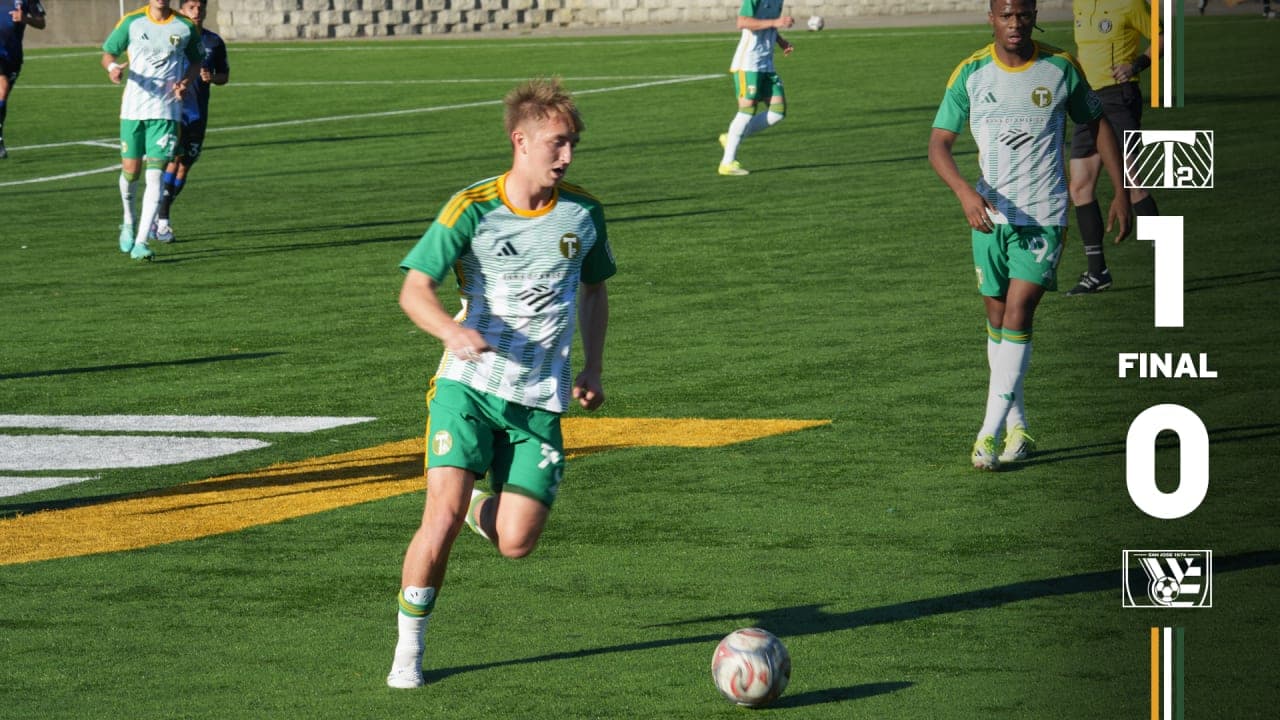
The Town vs Portland Timbers II: A Narrow Defeat in MLS Next Pro
Under the San Jose lights at PayPal Park, this MLS Next Pro group-stage meeting finished with a narrow, telling verdict: The Town 0–1 Portland Timbers II. Following this result, the league’s snapshot is clear. The Town, sitting 4th in the Pacific Division and 7th in the Eastern Conference group table, remain a volatile, high-ceiling side: 10 matches, 5 wins, 5 defeats, 21 goals for and 10 against overall, a goal difference of +11. Portland Timbers II, top of the Pacific Division and 4th in the Eastern Conference group, are more pragmatic: 10 played, 6 wins, 4 losses, 14 scored and 12 conceded overall, a goal difference of +2.
The seasonal DNA of both teams framed this contest. At home, The Town have been one of the league’s most entertaining outfits, averaging 2.8 goals for and just 0.8 against, with 11 scored and 3 conceded across 4 home fixtures. On their travels, Portland Timbers II have been ruthlessly efficient: 3 away wins from 4, with 5 goals for and 5 against, averaging 1.3 scored and 1.3 conceded. This was the clash of a free-flowing home attack against an away side comfortable in tight margins—and the 0–1 scoreline reflected that balance.
The lineups underlined the contrast in profiles. Daniel de Geer sent out The Town with F. Montali in goal and a youthful, energetic spine built around J. Heisner, A. Cano, N. Dossmann and M. Kwende. In midfield and advanced areas, the creative burden fell on R. Rajagopal and G. Bracken Serra, with Z. Bohane, K. Spivey, S. de Flores and J. Donnery offering movement across the front line. The bench—C. Lambe, E. Mendoza, D. Baptista, J. Spivey, T. Allen, Y. Kikuchi, A. Ling, D. Lorenti and W. Boyce—gave de Geer options, but also highlighted how much this side leans on collective rhythm rather than a single star.
Jack Cassidy’s Portland Timbers II, by contrast, arrived with a more defined identity. S. Joseph anchored the back line, shielded by A. Bamford, N. Lund, C. Ondo and C. Ferguson. In front of them, V. Enriquez and E. Izoita provided central structure, while C. Griffith, L. Fernandez-Kim and N. Santos operated between the lines behind D. Cervantes. The bench—M. Deisenhofer, C. Cruthers, B. Barjolo, D. Nunez, J. Izoita, M. Kissel and H. Mueller—carried enough variety for Cassidy to tweak tempo and shape.
Tactically, the void that defined The Town’s night was not about absences on the team sheet, but about the inability to translate their usual home scoring power into clear chances. Overall this campaign, they average 2.1 goals per match, but Portland’s compact mid-block, with Enriquez and Izoita screening central lanes, forced Rajagopal and Bracken Serra to receive under pressure and often back to goal. Without a clear reference point in the box, crosses and vertical passes into Donnery and de Flores were frequently delayed or under-hit.
Discipline also shaped the emotional tone. The Town’s season-long yellow card distribution shows a pronounced late-game spike: 29.41% of their yellows arrive between 76–90 minutes, with another 23.53% between 16–30 and 23.53% between 46–60. There is also a sharp disciplinary flashpoint in the 31–45 window, where 100.00% of their red cards this season have been shown. That pattern suggests a side that can become agitated as halves close, and Portland’s plan was clearly to keep the match tight and test that composure.
Portland Timbers II, meanwhile, have their own disciplinary curve: 32.00% of their yellows come between 61–75 minutes, 24.00% between 76–90, and 16.00% between 46–60. They accept that the cost of aggressive pressing in the second half is a steady drip of cards, but they rarely lose control—no red cards at all this campaign. At PayPal Park, that meant they could foul intelligently to break rhythm without risking a numerical disadvantage.
Within that framework, the key matchups told the story.
The “Hunter vs Shield” duel was The Town’s attack against Portland’s away defence. At home, The Town’s 11 goals from 4 matches, and a biggest home win of 6–1, show they can overwhelm visitors when momentum swings their way. Portland’s away record—5 scored, 5 conceded—speaks to a unit that accepts being out-shot as long as they can protect the box. S. Joseph’s organisation from the back, with Lund and Ondo close to him, compressed the central channels where The Town normally thrive. The visitors’ willingness to drop Fernandez-Kim and Griffith into a narrow defensive five out of possession turned Portland’s shape into a low-lying shield that The Town struggled to pierce.
In the “Engine Room” battle, Rajagopal and Bracken Serra tried to dictate tempo against Enriquez and Izoita. The Town’s overall average of 1.2 goals conceded per match suggests they are usually comfortable committing numbers forward, trusting their structure. But Portland’s symmetry—1.5 goals scored and 1.5 conceded overall—meant they were content to turn this into a game of margins. Enriquez repeatedly stepped out to disrupt Rajagopal’s first touch, while Izoita tracked the half-space movements of Bohane and Spivey. On the other side, Griffith—who appears across the league leaderboards for goals, assists and cards—was a subtle pivot, dropping into midfield to link and then spinning out to drag The Town’s defenders into uncomfortable zones.
Without minute-by-minute event data, the exact timing of the decisive goal remains off-stage, but the pattern of both teams’ seasons offers a plausible script. The Town, prone to late yellow cards and emotional spikes, likely pushed numbers forward in search of a breakthrough, only to be punished by Portland’s transition. Timbers II, with 3 clean sheets away and 2 penalties scored from 2 taken overall (a perfect 100.00% record from the spot, with no misses), have built a reputation for capitalising on isolated moments rather than sustained dominance.
From a statistical prognosis perspective, this match tilted towards Portland’s profile: a low-scoring, attritional contest in which their defensive solidity on their travels and clinical edge in big moments outweigh The Town’s usual attacking fluency at home. The Town’s season-long goal difference of +11 is built on explosive wins; Portland’s +2 is built on grinding out results. In San Jose, the grinders won.
For The Town, the path forward is clear: preserve the attacking numbers at home while addressing the psychological and structural wobbles that appear late in halves. For Portland Timbers II, this 0–1 away win is another data point in a growing body of evidence that Cassidy’s side are built for knockout-style football—exactly the kind of profile that, in an Eastern Conference play-off 1/8-final setting, can carry them deep into the MLS Next Pro season.
Related News

MLS Winners and Losers: Rising USMNT Star Cavan Sullivan, St. Louis City's Smart Moves, and Chicago Fire's Struggles Without Hugo Cuypers

MLS Highlights: Portland Timbers End Drought, Josh Sargent Shines, Cavan Sullivan Impresses
Tacoma Defiance vs Colorado Rapids II Stats: Head-to-Head Record

St. Louis City II vs Vancouver Whitecaps II: Head-to-Head Stats and Match Preview

Atlanta United II vs New York City II Stats: Head-to-Head Record
Houston Dynamo FC II vs Austin II Stats: Head-to-head Record