
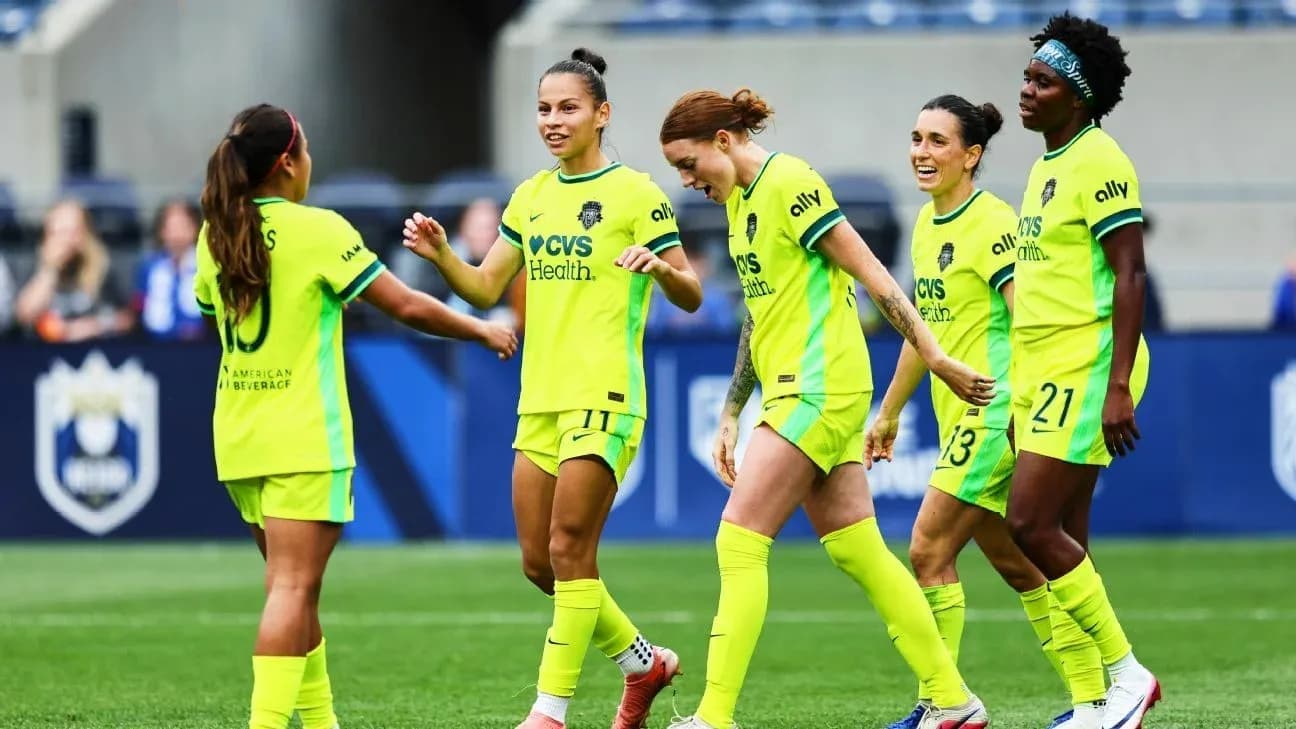
San Diego Wave Edges Washington Spirit 2–1 in NWSL Showdown
On a clear night at Snapdragon Stadium, the NWSL Women’s early pacesetters met in a contest that felt far more like a knockout tie than a routine Group Stage fixture. San Diego Wave W, top of the table with 21 points and a goal difference of 5 heading into this game, edged Washington Spirit W 2–1, a result that reaffirmed the Wave’s status as front-runners and checked the momentum of a Spirit side that arrived in San Diego with 18 points and a goal difference of 8.
Both coaches leaned into their identities by mirroring each other’s 4-2-3-1. For Jonas Eidevall, the shape was a familiar blend of pragmatism and flair, a system his side had already used in 5 league matches this season. Adrian Gonzalez has gone even further, deploying 4-2-3-1 in all 10 of Washington’s league games, and his team’s balance between a 1.6 total goalsFor average and a miserly 0.8 total goalsAgainst had underpinned a five-game winning streak before this setback.
San Diego’s seasonal DNA is built on assertiveness and risk. Overall they average 1.5 goalsFor and 1.0 goalsAgainst per game, with a particularly sharp edge on their travels (1.6 away goalsFor) but still a healthy 1.4 at home. That attacking commitment is double-edged: only 2 clean sheets in total and 3 matches in which they failed to score speak to a team that lives on the margins. Washington, by contrast, had been the league’s most balanced machine: 1.6 total goalsFor, 0.8 total goalsAgainst, and 5 clean sheets overall, with a defensive record at home of just 0.5 goalsAgainst that translated impressively to 1.0 away.
In San Diego, though, those numbers were bent by context. The Wave came in off a form line of LWWWWWLLWW, a streaky pattern that includes a five-game winning run and then a wobble, before this fixture offered a chance to reset. Washington’s own form, LDDDWWWWWL, told of a side that had learned to close games out, but also one that had just been reminded of its vulnerability.
Tactically, Eidevall’s lineup was about layering creativity around a single focal point. D. Haracic anchored the side from goal, protected by a back four of A. D. Van Zanten, K. Wesley, K. McNabb and the combative P. Morroni. Ahead of them, the double pivot of K. Dali and K. Ascanio was the brain and metronome: Dali as the progressive passer, Ascanio as the balancing presence whose season numbers – 292 passes with 86% accuracy and 18 tackles – underline her quiet authority.
The three behind lone forward T. Byars were the real statement of intent. Gabi Portilho, G. Corley and Dudinha formed a fluid band of creators and dribblers, with Dudinha the headline act. Heading into this game she had 3 goals and 4 assists, 39 dribble attempts with 23 successes, and 94 total duels with 48 won – the profile of a winger who turns isolated possessions into territory and chances. With Byars stretching the last line, the Wave’s plan was clear: drag Washington’s full-backs into uncomfortable spaces and let Dudinha and Portilho attack the gaps.
Gonzalez’s Spirit mirrored the structure but with a different personality. Sandy MacIver in goal fronted a back four of L. Di Guglielmo, T. Rudd, E. Morgan and G. Carle, a unit that has underpinned the league’s best defensive record. In front, the double pivot of R. Bernal and H. Hershfelt provided steel and circulation. Bernal, who had already scored 2 goals and taken 5 shots with 84% pass accuracy and 17 tackles this season, is Washington’s understated enforcer-playmaker hybrid.
Further forward, Washington’s “three” was loaded with star power: T. Rodman on the right, L. Santos central, C. Martinez Ovando on the left, all servicing the penalty-box instincts of S. Cantore. Rodman’s 3 goals and 3 assists, backed by 25 shots (13 on target) and 87 total duels, make her the archetypal “hunter” in this system – a wide forward who can stretch, isolate and finish. Santos, with 3 goals, 2 assists and 403 completed passes at 78% accuracy, is the conductor, while Cantore’s 3 goals from 13 shots offer a penalty-area reference point.
The disciplinary undercurrent added an edge. For San Diego, P. Morroni arrived as one of the league’s leading card collectors: 3 yellow cards, 16 fouls committed and 16 drawn. For Washington, Bernal and Rodman both carried 2 yellow cards into the game. The league’s card timing data painted a clear picture: the Wave’s yellows cluster between 46-60 and 61-75 minutes (33.33% in each window), while Washington’s are spread but spike again late, with 25.00% of their yellows between 76-90 minutes. In a match with mirrored 4-2-3-1s and dangerous dribblers on both sides, those trends foretold a second half where fatigue and one-on-one duels would test discipline.
The key matchup was always going to be Dudinha versus Washington’s right-sided block of Di Guglielmo and Rudd. Washington’s away defensive average of 1.0 goalsAgainst had survived more direct attacks, but not many wide players with Dudinha’s combination of volume and efficiency. Every time she squared up her marker, she threatened to tilt the geometry of the Spirit’s back four, opening central pockets for Corley and Dali to exploit.
On the other flank, Washington’s “hunter” was Rodman, who repeatedly asked questions of Morroni. The French full-back, with 29 tackles and 2 blocked shots this season, is a proactive defender, but her aggressive front-foot style, combined with her card history, made this a high-risk duel. Behind Rodman, Santos drifted cleverly into half-spaces, trying to pull Ascanio out of the pivot and create channels for Cantore.
In the engine room, Ascanio versus Bernal was the silent war that framed everything. Both are top-20 in assists and chance creation metrics for their teams; both sit at the base of their structures. Ascanio’s 2 assists and 9 key passes contrast with Bernal’s 5 key passes and 2 goals, but their defensive lines are similar: 18 tackles each, with Bernal adding 2 blocked shots and 7 interceptions. Whichever of them could step higher without leaving their centre-backs exposed would dictate where the game was played.
Following this result, the numbers will tilt slightly in San Diego’s favour, but the deeper statistical prognosis remains tight. The Wave’s overall 1.5 goalsFor and 1.0 goalsAgainst suggest a side that lives in narrow margins but usually finds a way. Washington’s 1.6 goalsFor and 0.8 goalsAgainst overall still speak of a more controlled machine, one that on another night might have turned half-chances into goals.
In xG terms, this matchup profiles as a clash between a high-variance attack and a structurally sound defence. San Diego’s tendency to flood the final third with creators like Dudinha, Portilho and Corley naturally inflates shot volume and expected goals, while Washington’s compact 4-2-3-1, anchored by Bernal and Hershfelt, is designed to keep xG against low by forcing low-quality attempts.
The 2–1 scoreline at Snapdragon Stadium felt like the median of those competing truths. The Wave’s offensive risk, driven by their attacking quartet, just edged Washington’s defensive solidity. Over a longer arc – be it the rest of the Group Stage or a hypothetical knockout – the data suggests that whenever these two mirror each other again, the margins will remain razor-thin, and the battle between the hunters on the flanks and the shields in midfield will decide which narrative prevails.
Related News
Orlando Pride W vs Portland Thorns W: Playoff Showdown
San Diego Wave W vs Kansas City W Predicted Lineups: Team News for NWSL Women
Orlando Pride W vs Portland Thorns W Prediction: Key Stats and Betting Tips
San Diego Wave W vs Kansas City W: Key NWSL Clash Preview
San Diego Wave W vs Kansas City W Prediction: Key Stats and Betting Tips
Portland Thorns and Chicago Red Stars Draw in NWSL Showdown