
Inside the Premier League’s Transfer Bubble: A New Era
English football used to pay extra for the passport. Now the real premium is the postcode.
If a player already lives inside the Premier League, his price rockets. This summer, clubs paid an average of £39.4m for signings from other Premier League sides – almost double the £20.2m spent on players arriving from abroad in the same window.
Kieran Maguire, professor of football finance at the University of Liverpool, has a name for it: “a Premier League tax”.
And that tax is shaping everything.
England Buying England
The league smashed more spending records in the latest summer window, but the real story lies in where the money went.
High-value deals – transfers worth £40m or more – have exploded. In 2022-23 there were 13 such moves. This summer? Twenty-seven.
Two years ago, the balance of those mega deals still leaned towards Europe: seven of them involved clubs on the continent, six were between Premier League sides.
That landscape has flipped.
This summer, there were nine £40m-plus deals with European clubs. Inside England, the number trebled from six to 18. Total domestic transfer spend more than doubled.
Premier League clubs have become increasingly willing to sell to each other, rivals included. The real heavy trading floor is no longer Europe. It is the league itself.
Only Europe’s true giants can live in this market now – and even they are being pushed to the fringes.
The ‘Algorithm Kids’ and the Petri Dish
Maguire believes part of the shift started long before the big fees.
English clubs have spent years pushing deeper into overseas scouting, signing players earlier and moulding them into Premier League assets.
“We've got a new tranche of clubs, sort of the algorithm kids, who are recruiting from the international markets,” he said. “They're bringing players to the Premier League, and then the Big Six clubs are signing the best players.”
Brighton have almost become the model.
They picked up Carlos Baleba from Lille three years ago for £23m. Last week, they sold him to Manchester United for £70m. A near-tripling of value, created on English soil.
Maguire describes it as a “petri dish” – a controlled environment where overseas talent is tested, adapted and then sold on. If the player thrives, everyone wins: the buying club gets a proven Premier League performer, the selling club banks a huge profit, and the player climbs the ladder.
But that only explains part of the madness.
Deals Only the Premier League Could Make
Some transfers feel like they could only exist in this ecosystem.
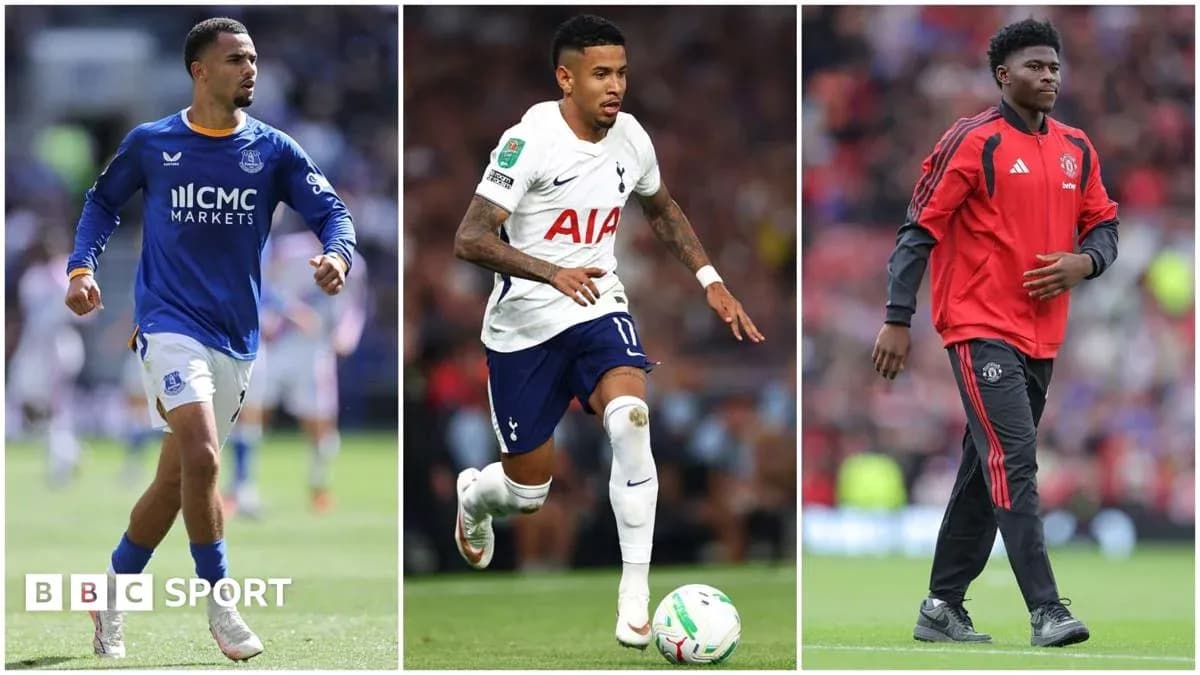
Would a European club really have paid Manchester City the £75m Tottenham spent on Savio? Would anyone outside England have given Everton £65m for Iliman Ndiaye? Or matched the £85m West Ham received from Spurs for Mateus Fernandes?
The answer, in most cases, is no.
On the continent, only Barcelona, Bayern Munich and Paris St-Germain made signings worth £40m or more from other European clubs this summer – just seven deals in total.
Trevor Watkins, former Bournemouth chairman and now a sports lawyer, sees a league that has effectively sealed itself off.
“The revenues dwarf what other leagues generate,” he told BBC 5 Live Breakfast. “And what you see this year is a lot of deals between clubs in England.
“A lot of money going down to lower leagues, but also between Premier League sides because, to be honest, they're probably the only ones that will pay the wages or pay the fees.”
The market has become a game of spreadsheets, where traditional notions of value – goals, assists, tackles – are only half the equation.
The other half is profit.
Why Profit Matters More Than the Player
Under the Premier League’s financial rules, the profit on a transfer can matter more than the player’s on-pitch output. Profit is what allows clubs to reinvest and stay on the right side of regulation.
Take Elliot Anderson.
Nottingham Forest signed him from Newcastle for £35m. They then sold him to Manchester City for £116m. On the face of it, that looks like an £81m profit.
In accounting terms, it’s very different.
Forest spread the original £35m fee over the length of his contract. When he left, around £21m of that cost remained on their books. So the profit for financial purposes is calculated as £116m minus £21m – £95m.
Under the new squad cost ratio (SCR) rules, that £95m is then averaged over three years, giving Forest £31.67m a season to play with in their SCR calculations.
Clubs can no longer flog a player for a one-off, quick financial fix. They can’t just sell on deadline day to avoid breaching rules or to suddenly open a huge spending pot for the next window. Everything is smoothed out, averaged, regulated.
Which means something simple: clubs are under pressure to generate the highest possible fees, as often as possible, to keep those profit averages high.
And in that race, the richest clubs start yards ahead.
Big Six, Bigger Advantage
SCR is supposed to bring control. In practice, it amplifies the power of the biggest.
The ‘Big Six’ – Arsenal, Chelsea, Liverpool, Manchester City, Manchester United and Tottenham – operate on a commercial scale the rest of the league cannot touch. This summer they spent £1.658bn on players.
“Those clubs have future-proofed themselves by trying to generate more income,” Maguire said. “Spurs is a classic example. Spurs now have a multi-function, multi-sport stadium, of which the football club is the biggest part.
“It is a reward for those clubs that have expanded their stadiums, or thought outside of the box in terms of trying to generate additional revenues.”
For the other 14 clubs, who collectively spent £1.833bn, the transfer market is not a luxury. It is survival.
Aston Villa and Newcastle alone completed five deals worth £40m or more between them this summer – but only after banking hundreds of millions from player sales.
They have to sell smartly just to stand still.
Europe Feels the Shockwaves
When Premier League money circulates mainly within its own borders, less flows out to the rest of Europe. Yet the impact is still felt across the continent.
Fees and wages rise everywhere, even for clubs who are not part of the English gold rush.
On Wednesday, Javier Gomez, La Liga’s corporate general director, attacked what he called a “loss-making model which is an issue exclusive to the Premier League”.
“It has other consequences,” he said. “It inflates the entire sector – it inflates the Premier League, the Bundesliga, the French League, and eventually us as well.”
Some of Europe’s traditional heavyweights have already been squeezed out of the top tier of the market.
“With the exception of some of the global brands within football, and I think you'd look at Real Madrid, Barcelona, PSG and Bayern Munich, the Premier League can outspend anyone and everyone,” Maguire said.
The latest Deloitte Money League underlined that dominance, with 14 Premier League clubs among the 30 biggest in world football. Real Madrid, Barcelona, PSG and Bayern Munich took the top four spots, but Liverpool led a block of six English clubs that filled out the rest of the top 10.
For everyone else, the battle has shifted.
Porto vs Coventry
Andre Villas-Boas, now president of FC Porto, painted a stark picture of where clubs like his stand.
“For Porto, it means we are competing for talent not with Man City or Liverpool but with (the likes of) Coventry and Brentford, without any disrespect,” he told BBC Sport.
“The fact that they have this spending power makes it difficult for us.
The Premier League is set apart from all the rest, which means English clubs are becoming more and more dominant of European competitions.”
The evidence is already there.
Aston Villa and Crystal Palace lifted the Europa League and Conference League respectively last season. Arsenal reached the Champions League final, only to lose to Paris St-Germain.
English clubs are not just outspending the rest of Europe. They are outlasting them deep into the season.
A Bubble That Refuses to Burst
Every year, there is talk of a correction. Every year, the numbers swell again.
The Premier League’s transfer spending has become a bubble that simply will not burst. Domestic deals grow larger, the internal market grows tighter, and the gap to the rest of Europe stretches a little wider.
At some point, the question will no longer be whether anyone can catch up.
It will be whether anyone outside England can still afford to play the same game.
Related News

Valencia Nears Agreement with Javier Aguirre for Coaching Role

Loïs Openda Reflects on Serie A Experience

Celtic vs Rangers: O'Neill Faces Pressure in Old Firm Showdown

Barcelona signs 16-year-old forward Dany Freire after impressive trial
Chelsea Faces Competition for Josh Acheampong as European Giants Show Interest

Michael Olise's Stellar Performance with Hat-Trick and Neymar's Gift