
Pisa vs Napoli: Tactical Analysis of Serie A Showdown
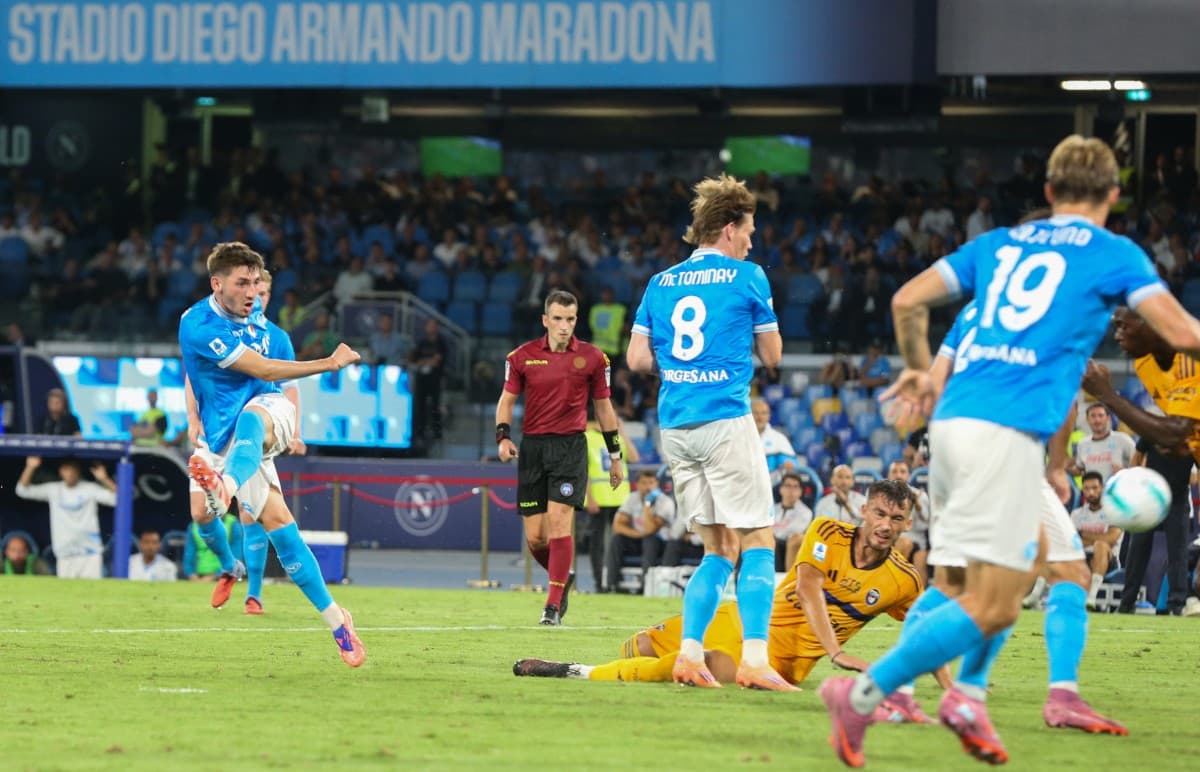
The afternoon at Arena Garibaldi – Stadio Romeo Anconetani closed not with a great escape, but with a confirmation. Pisa, rooted to 20th in Serie A on 18 points with a goal difference of -44 heading into this game, met a Napoli side chasing perfection in the details of a near-complete season. The 3–0 scoreline in favour of Antonio Conte’s men felt less like a surprise and more like the logical extension of two very different campaigns.
This was Round 37, the penultimate step of the regular season, and the table framed everything. Pisa had won only 2 of their 37 matches overall, drawing 12 and losing 23. At home, they had taken just 2 wins from 19, scoring 9 and conceding 26. Napoli, by contrast, arrived second in the league on 73 points, with 22 wins overall and a goal difference of +21, built on 57 goals for and 36 against. On their travels, they had 10 away wins from 19, scoring 25 and conceding 18. The gulf was structural, not circumstantial, and it played out across every line of the pitch.
Oscar Hiljemark leaned into Pisa’s seasonal DNA with a 3-5-2, the formation they had used more than any other this year. Antonio Caracciolo, one of Serie A’s most carded defenders with 10 yellows, anchored the back three between S. Canestrelli and A. Calabresi. Ahead of them, a hard‑running midfield five – M. Leris and S. Angori as wide workers, with M. Aebischer, M. Hojholt and E. Akinsanmiro inside – tried to compress space and shield a fragile defensive record that had seen Pisa concede 69 goals overall at an average of 1.4 at home and 1.9 in total. Up front, S. Moreo and F. Stojilkovic were asked to live off transitions and scraps.
Napoli answered with a Conte‑esque 3-4-3, but the names gave it a different flavour. A. Rrahmani flanked by S. Beukema and A. Buongiorno formed a back three that underpinned a defence conceding only 1.0 goals per game overall and 0.9 away. G. Di Lorenzo and L. Spinazzola operated as the wide men in the four, with S. Lobotka and S. McTominay – one of Serie A’s standout midfield scorers with 10 league goals – controlling the centre. Ahead of them, E. Elmas and Alisson Santos supported R. Hojlund, who arrived as Napoli’s top scorer with 11 goals and 5 assists, and a constant threat in depth and in the box.
The absences only sharpened the tactical lines. Pisa were without R. Bozhinov and F. Loyola through red-card suspensions, stripping Hiljemark of defensive and rotational options, while F. Coppola, D. Denoon, Lorran and M. Tramoni were all sidelined by injury or inactivity. The bench still offered experience – J. Cuadrado, I. Touré, S. Iling Junior, C. Stengs – but the starting XI was clearly a patched version of a squad that has struggled for stability all season.
Napoli’s missing men were of a different profile but similar importance. David Neres (ankle), R. Lukaku (hip) and M. Politano (suspension for yellow cards) removed three high‑impact attacking options. Yet Conte’s depth allowed him to absorb those losses without distorting the structure. The fact that Napoli had still managed 57 goals overall, with 1.3 goals per game on their travels, spoke to a system not reliant on a single winger or target man.
This was always going to be “Hunter vs Shield” tilted towards the hunter. Pisa’s shield has been thin: only 5 clean sheets overall, and 26 goals conceded at home. Their tendency to suffer late is written into their disciplinary profile: 25.97% of their yellow cards come in the 76–90' window, a sign of fatigue and desperation when games stretch. Napoli, by contrast, have 14 clean sheets overall, 8 of them away, and a defensive line comfortable holding high or dropping into a compact block.
Into that context stepped Hojlund. With 44 shots in total, 23 on target, he is not a volume shooter by elite standards, but he is ruthlessly vertical. Against a Pisa back three that has often been forced to defend its own box, his ability to spin into channels between Caracciolo and the wide centre-backs was a constant tactical fault line. When Napoli advanced, McTominay’s late runs from midfield – 71 shots and 10 goals this campaign – gave Pisa an extra body to track in the area, stretching their already stressed defensive line.
The “Engine Room” duel in midfield was equally stark. Aebischer, Pisa’s metronome with 1,490 completed passes and 33 key passes, tried to offer control and progression, but he was up against Lobotka’s press resistance and McTominay’s two‑way power. Aebischer’s 8 yellow cards this season tell the story of a player often forced into emergency defending; against Napoli’s rotations, he was again dragged into firefighting rather than dictating. Behind him, Caracciolo’s profile – 71 tackles, 24 blocked shots, 51 interceptions – is that of a defender constantly under siege. In a match where Napoli could pin Pisa back, his ability to read and block shots kept the score from becoming truly brutal, but the pressure was relentless.
Discipline hovered over the contest. Pisa’s season-long pattern of red cards – with dismissals clustered in the 16–60' ranges and again at 91–105' – had already cost them Bozhinov and Loyola for this fixture. On the other side, Napoli’s only red-card spikes came late: 100.00% of their reds arriving in the 76–90' band, a reminder that even a controlled side can lose its head when closing out games. That tension was present in the duels, but Napoli’s game management, honed by a run of 5‑match winning streaks in their season, kept them on the right side of the line.
From a statistical prognosis standpoint, everything pointed towards exactly the kind of match that unfolded. Pisa’s attack, averaging just 0.5 goals at home and failing to score in 12 home fixtures, ran into a Napoli defence that had shut out opponents 8 times away. Even without precise xG numbers, the expected pattern was clear: Napoli generating the better chances through structured possession and vertical surges from Hojlund and McTominay; Pisa reliant on low‑probability counters and set pieces. With Napoli perfect from the spot this season (4 penalties taken, 4 scored, none missed) and Pisa also flawless from 6 penalties, there was no penalty‑box lottery to tilt the narrative.
Following this result, the story is less about a single afternoon and more about trajectories. Pisa’s relegation-bound season, built on too few goals and too many fraught defensive phases, met Napoli’s Champions League‑bound campaign, defined by balance, depth and a clear tactical identity. The 3–0 was not just a scoreline; it was a mirror held up to a year’s worth of numbers, patterns and choices – and it reflected exactly what the data had been saying all along.
Related News

Frosinone vs Como Prediction: Key Stats and Betting Tips

Fiorentina vs Napoli Prediction: Key Stats and Betting Tips

AS Roma vs Inter: Serie A Showdown on 19 September 2026

Inter’s Dominance in 5–3 Win Over Udinese

AS Roma vs Inter Prediction: Key Stats and Betting Tips
Lazio and AC Milan Battle to a 2–2 Draw: Early Serie A Insights