
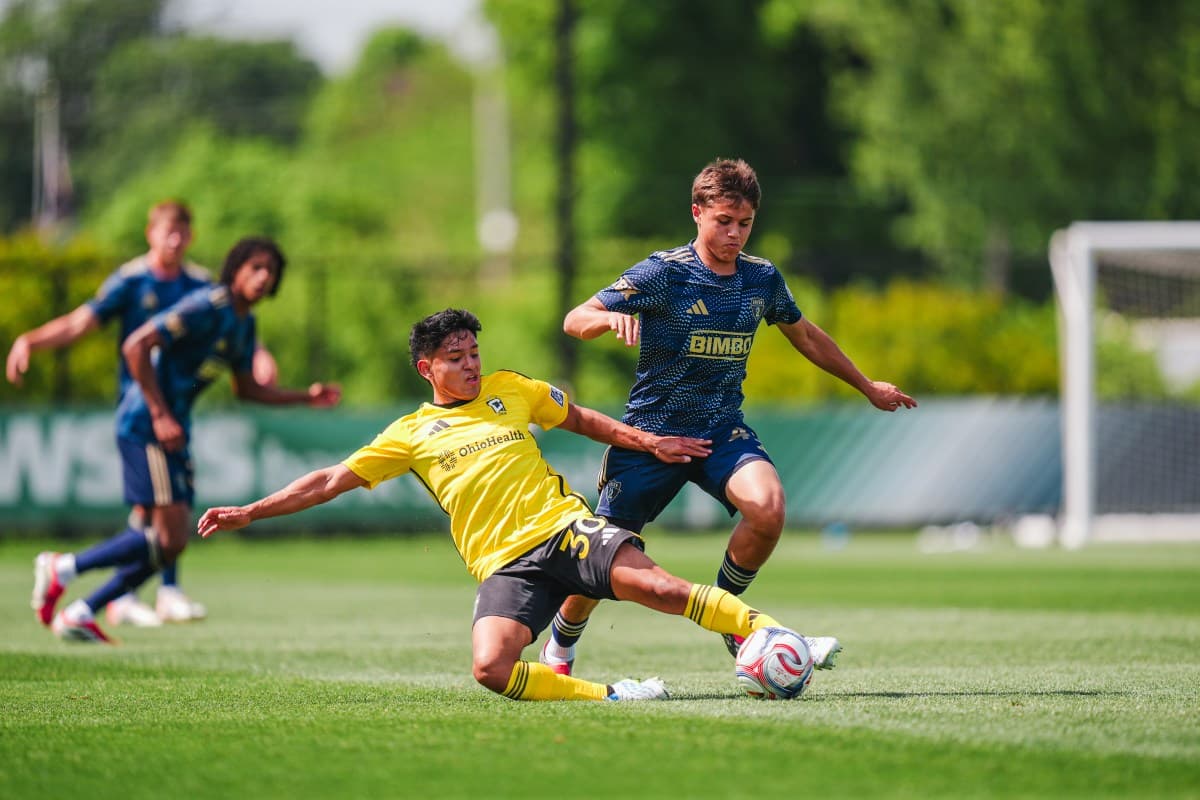
Philadelphia Union II vs Columbus Crew II: A Clash of Contrasting Styles
Subaru Park had already emptied of its initial tension by the time the decisive penalty was struck, but the story of Philadelphia Union II versus Columbus Crew II had been written long before the 8–7 shootout edge to the visitors. Following this result, it felt like a clash between two distinct seasonal identities: Union II, volatile but competitive in every outing, and Crew II, a side whose extremes—imperious at home, fragile on their travels—had to be reconciled in a neutral test of nerve.
In the broader context of the 2026 MLS Next Pro season, both teams arrive as dangerous but imperfect contenders. Philadelphia Union II sit on 15 points in the Eastern Conference, 9th overall, with a goal difference of +2 built on 12 goals for and 10 against in total league play. Their campaign has been streaky—form marked as “LLLWL”—but underneath that is a profile of a team that rarely draws, either winning or losing the initiative outright. Columbus Crew II, meanwhile, hold 19 points and a total goal difference of 0, their 18 goals scored matched exactly by 18 conceded. They are 5th in the Eastern Conference and flagged for promotion play-offs contention, a side whose capacity to win (7 victories in 11) coexists with clear structural leaks, especially away from home.
Tactical Analysis
The tactical voids in this fixture were not defined by absentees—no missing player data is listed—but by the way both coaches, Ryan Richter and Federico Higuain, had to manage squads that habitually live on the edge of disciplinary and defensive balance. Union II’s season-long card map shows a worrying spread of yellow cards across almost every phase, with notable spikes at 16–30 minutes (19.35%) and again at 31–45, 61–75, and 91–105 minutes (each 16.13%). More alarmingly, their red cards are split evenly between 31–45 minutes and 61–75 minutes, each accounting for 50.00% of their total reds. This is a team that can lose control in the middle phases of each half.
Columbus Crew II are no saints either. Their yellow cards peak between 61–75 minutes, where 28.57% of their cautions arrive, followed by a flurry at 31–45 minutes (23.81%). They carry a red-card profile that is brutally early: 100.00% of their reds arrive in the 0–15 minute window. Higuain’s side starts on the front foot emotionally as well as tactically; when that aggression spills over, it can leave them undermanned before the match has even settled.
Squad Structure
From a squad-structure perspective, Union II’s XI is built around a young, flexible core. A. Rick anchors them from the back, with G. Sequera, F. Sundstrom, R. Uzcategui, and J. Griffin forming the backbone of a defensive line that has conceded 11 goals in total league play—8 at home and 3 away—with an overall average of 1.1 goals against per match. In possession, the tempo is set by K. LeBlanc, O. Benitez, and M. De Paula, while N. Hasan and S. Korzeniowski provide the connective tissue between midfield and the advanced zones. M. Jakupovic leads the line, tasked with making the most of a modest but consistent attacking output: 13 total goals this season, with averages of 1.3 at home and 1.3 away.
Richter’s bench offers a blend of defensive insurance and late-game energy: P. Holbrook as the reserve goalkeeper, A. Craig and K. Moore as structural reinforcements, and attacking sparks like O. Pratt, J. Ruf, and L. Harrington. T. Gladstone, M. Berthe, and A. Diop round out a substitutes group built to change the rhythm rather than simply cover positions.
On the other side, Columbus Crew II’s starting XI reflects Higuain’s philosophy of proactive, ball-playing football. L. Pruter is the last line behind a back unit featuring B. Adu-Gyamfi, Q. Elliot, R. Aoki, and I. Heffess. The midfield triangle of T. Brown, K. Gbamble, and N. Rincon is designed to compress space and spring transitions, while J. Chirinos, Z. Zengue, and C. Adams give the front line its movement and pressing intensity. This is a team that, over the season, scores freely—20 total goals, averaging 2.2 at home and 1.5 on their travels—but pays a price defensively, especially away, where they concede 2.3 goals per match and have allowed 14 of their 18 total goals against.
Matchup Insights
The “Hunter vs Shield” matchup in this tie is less about individual scorers—no top-scorer data is provided—and more about systemic tendencies. Crew II’s attack, which has produced 9 away goals in league play, runs into a Union II defense that, at home, allows an average of 1.1 goals per match and has already recorded 2 clean sheets in front of their own crowd. Conversely, Union II’s attack, averaging 1.3 goals at home, faces a Crew II back line that has been porous on their travels, with 14 away goals conceded and no away clean sheets.
In the “Engine Room,” the battle between Union II’s central trio—LeBlanc, Benitez, De Paula—and Crew II’s Brown, Gbamble, and Rincon is where the match’s tactical story is written. Union II need that unit to control tempo and reduce transitional chaos, especially in those minutes where their card profile spikes. Crew II’s midfield, by contrast, thrives when the game becomes stretched, using their higher total scoring average of 1.8 goals per match to tilt matches into shootouts that their attacking depth can win.
Statistically, the prognosis heading into a matchup between these two profiles always leaned toward volatility rather than control. Union II’s season without a single draw in 10 matches, combined with Crew II’s zero draws in 11, points to binary outcomes and high emotional load. Both sides have yet to win a penalty in league play—each with 0 total penalties, 0 scored, 0 missed—so the drama at Subaru Park going all the way to an 8–7 shootout felt like an escalation beyond their usual statistical script.
Following this result, the numbers and the narrative align: Columbus Crew II’s higher ceiling in attack and their willingness to live with defensive risk ultimately carried them through a finely poised contest, while Philadelphia Union II once again walked the thin line between promise and punishment. The margins were penalties-thin, but the underlying squad profiles explain why this tie was always destined to be decided at the very edge of control.
Related News

MLS Winners and Losers: Rising USMNT Star Cavan Sullivan, St. Louis City's Smart Moves, and Chicago Fire's Struggles Without Hugo Cuypers
MLS Highlights: Portland Timbers End Drought, Josh Sargent Shines, Cavan Sullivan Impresses
Tacoma Defiance vs Colorado Rapids II Stats: Head-to-Head Record

St. Louis City II vs Vancouver Whitecaps II: Head-to-Head Stats and Match Preview
Atlanta United II vs New York City II Stats: Head-to-Head Record
Houston Dynamo FC II vs Austin II Stats: Head-to-head Record