
Marcus Rashford's Uncertain Future: Barcelona or Manchester United?
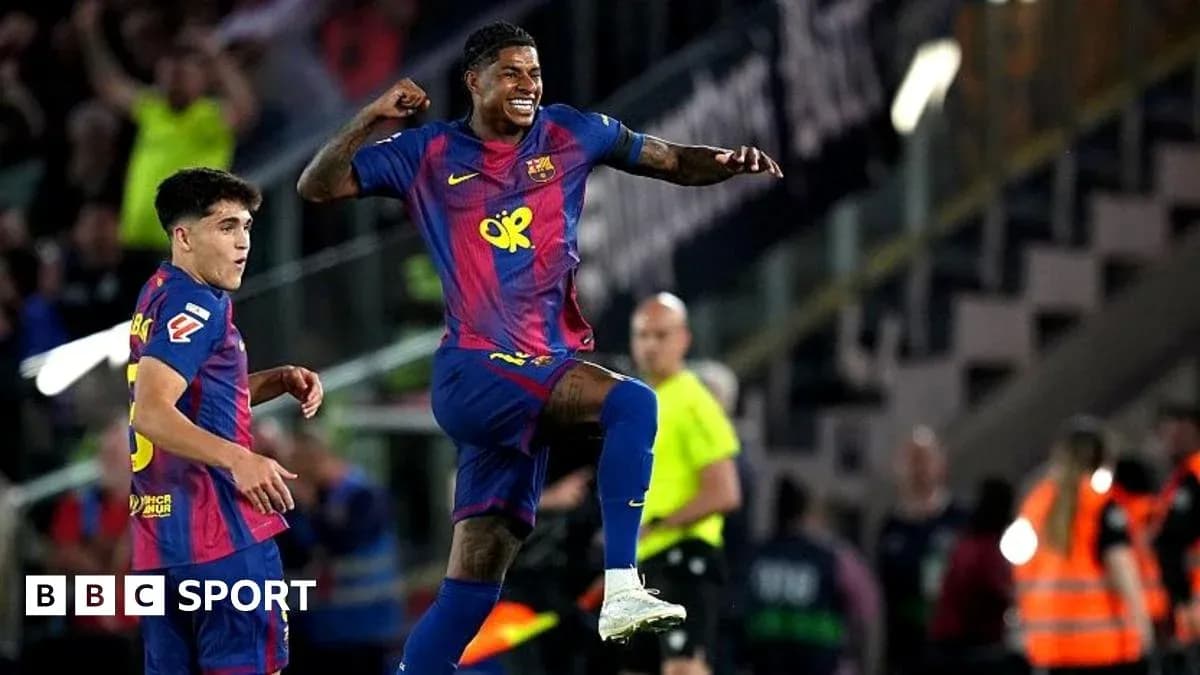
Marcus Rashford stood in the mixed zone with a medal round his neck and a title in his pocket, but the question was about his future, not his free-kick.
"I don't know, I am not a magician. If I was, I would stay. We will see."
It was vague. It was also brutally honest. Because right now, Rashford genuinely does not know if he will be a Barcelona player next season.
He wants to be. Barcelona see the value. Manchester United see an opportunity. And between those three points lies a negotiation that one insider summed up simply: "it will involve a lot of hard negotiating".
A bargain clause, a big problem
On paper, this should be straightforward.
Rashford is on loan from Manchester United. His deal includes an option for Barcelona to buy him permanently for €30m (£25.94m) if they trigger it by 15 June. For a 28-year-old forward with 14 goals and 14 assists in 47 appearances, a player who has forced his way back into England contention under Thomas Tuchel and is likely heading to the World Cup, that fee is well below market value.
Barcelona would be getting a proven international at a discount. Rashford would stay where he is clearly enjoying his football. United would move on from a player who was shunted into Ruben Amorim’s “bomb squad” last summer.
That’s the easy bit.
The complications start the moment you look beyond the clause.
Rashford is contracted to United until 30 June 2028. When Casemiro’s deal expires on 30 June this year, Rashford will become the club’s highest earner, especially now his salary has returned to its full level after the 25% cut for missing out on the Champions League was restored. Those wages are central to everything.
Barcelona, wrestling with their own financial constraints, are reluctant to simply press the button on the €30m option. They are trying to renegotiate, exploring the idea of another loan rather than a permanent deal this summer.
United have pushed back. Hard. Another loan is not on their agenda.
United’s gamble
From Old Trafford’s perspective, that stance makes sense.
They know Rashford’s profile still carries weight across Europe. If Barcelona will not pay the agreed fee, other clubs might go higher. United also have a clear strategic drive under minority owner Sir Jim Ratcliffe to bring wage costs under control and to ensure, in his own words, that the highest earners are “on the pitch”.
The timing matters. United are heading into a summer where they plan to sign at least two central midfielders and, by their own internal assessment, probably two more players in other positions. They also need to address Bruno Fernandes’ contract.
Trying to negotiate new deals and fresh signings while carrying Rashford’s salary on the books is a problem. Every big earner they keep limits what they can do elsewhere.
Yet there is risk.
Head coach Michael Carrick said last month that “nothing has been decided” on Rashford and made it clear he would be happy to work with him again if he returned and Carrick is confirmed as permanent manager. That is not a throwaway line. It leaves the door open to a player who, at his best, can still transform games.
But if Rashford comes back, United must either fully reintegrate one of their top earners or find another buyer in a market that already knows Barcelona are trying to haggle. That weakens their hand.
Barcelona’s dilemma
Inside Barcelona, the debate is just as sharp.
On the pitch, Rashford has delivered. Fourteen goals, fourteen assists, and a starring role at key moments, none bigger than that Beckham-esque free-kick in the title-clinching El Clasico win over Real Madrid. With Raphinha out injured, Rashford stepped in, started games, and carried responsibility.
He has not always been consistent. Some supporters see the highlight reel and want him to stay. Others look at the lulls and wonder if the club should invest elsewhere.
Now Raphinha is fit again and back in the side. That shifts the dynamic. The question for Barcelona is no longer just whether Rashford is good enough, but whether his impact – increasingly from the bench or as a rotation option – justifies the commitment, even at €30m.
From a pure market perspective, it is a bargain. From a wage and squad-planning perspective, it is more complicated.
Rashford’s choice, if he gets one
Rashford has rarely spoken at length to Barcelona’s media this season, but when he did appear in the mixed zone after sealing his first league title, his body language told its own story. Relaxed. Smiling. Enjoying it.
He called Barcelona “special”. He said they are “going to win so much in the future”. He admitted he is “not ready for it to end”.
This is not a player itching to get back to Manchester. This is a player who has found a different rhythm to his career and would happily extend the soundtrack.
For all the spreadsheets, clauses and wage structures, that matters. A forward who feels wanted, who believes he is part of something growing, is usually a better version of himself than one returning to a club that had effectively written him off a year earlier.
The problem for Rashford is that his desire is only one piece of the puzzle. United’s financial strategy, Barcelona’s budget and the broader transfer market will decide how much power he really has.
For now, he waits. Barcelona weigh the value of a cut-price star against a tight salary structure. United weigh a tempting fee and wage relief against the possibility of a revived asset walking back through the door.
The free-kick was pure clarity. The future is anything but.
Related News
Raphinha’s Hat-Trick Powers Barcelona to 7-2 Victory Over Racing Santander
Carabao Cup Fourth Round Draw: Liverpool Set to Clash with Chelsea, Arsenal to Face Fleetwood Town
Key Football Matches to Watch in Azerbaijan This Autumn
Raphinha's Hat-Trick Drives Barcelona to 7-2 Triumph Over Racing Santander
Hansi Flick Leads Barcelona to Record-Breaking Seven Wins in a Row
Gavi Reflects on Injury Return as Barcelona Dominate Racing Santander 7-2