
Iran's World Cup Journey Amid War and Visa Issues
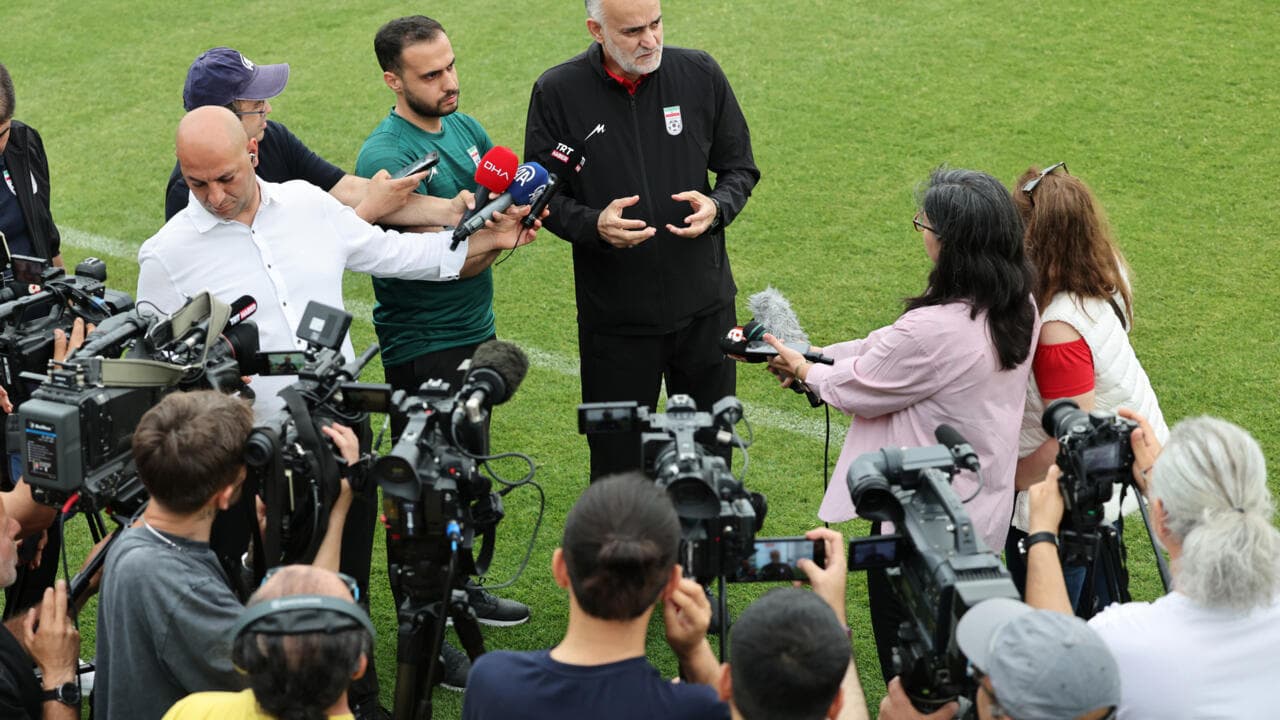
Iran’s national team slipped into Turkey on Monday, not for a friendly or a brief tune‑up, but for a long, uneasy wait before a World Cup unlike any they have known.
They will spend several weeks in camp there, sharpening tactics and legs, while the world around them burns. The tournament is being co‑hosted by the United States, which, alongside Israel, began bombing Iran on February 28, igniting a wider war across the Middle East. Against that backdrop, a routine pre‑World Cup build‑up has turned into a geopolitical tightrope.
Inside the camp, the message from the federation is one of order and control.
“Everything will proceed properly according to the protocols and what FIFA has stipulated,” said national team director and federation vice-president Mehdi Mohammad Nabi, outlining a plan that leans heavily on football’s governing body and the structures around it.
He pointed to the machinery already in motion on the other side of the Atlantic. Inside the United States, he said, dedicated committees are in place, including a security committee working with FIFA and tasked with safeguarding the event. For Iran, this is not unfamiliar territory.
“In past years we’ve experienced all of this and we’re fully informed about how these security committees operate at every World Cup we’ve participated in,” Mohammad Nabi said. “In this regard, we’re very confident and we have a clear plan.”
Confidence, though, does not clear borders.
Iranian officials have already admitted that players and staff still do not have visas for the US. The delegation now intends to apply at the Canadian embassy in Turkey, using their camp as both training base and bureaucratic staging post.
Here lies the tension at the heart of Iran’s World Cup journey: a team preparing to face New Zealand, Belgium and Egypt on American soil while still unsure whether every player and staff member will be allowed to cross the ocean.
“We’re not certain yet that all the players and staff will receive US visas,” Mohammad Nabi conceded.
That uncertainty cuts straight to the responsibilities of the host nation. Under FIFA statutes and competition regulations, the countries staging a World Cup must guarantee access for all qualified teams. Iran’s camp is clinging to that framework.
“One of the rules that applies to the host country is that they must provide guarantees, according to FIFA’s statutes and the regulations of the competition,” Mohammad Nabi said. “One of their commitments is the visas: they have to grant the necessary visa facilities to all the teams that have qualified for the World Cup.
“And FIFA has made arrangements so that the host country will provide the necessary cooperation to teams like Iran in this area.”
The football itself, for now, sits just over the horizon. Iran are slated to open their Group G campaign against New Zealand in Los Angeles on June 15. Belgium await them in the same city, a heavyweight clash that could define their path. Egypt then stand in their way in Seattle, a fixture that may decide whether this turbulent journey leads to the knockout rounds or ends on the group-stage floor.
During the tournament, Iran will be based in Tucson, Arizona, trading the charged atmosphere of the Middle East for the dry heat of the American desert. If they get there, they will find training pitches, security cordons and the familiar rhythms of a World Cup camp.
First, they must solve a problem no coach can address on the training ground: getting an entire squad through a hostile political climate and into a country currently at war with their own.
The countdown to June 15 has started. The question now is not how Iran will line up against New Zealand in Los Angeles, but whether every one of their players will be allowed to walk out of that tunnel at all.
Related News

Raphinha’s Hat-Trick Powers Barcelona to 7-2 Victory Over Racing Santander

Carabao Cup Fourth Round Draw: Liverpool Set to Clash with Chelsea, Arsenal to Face Fleetwood Town
Key Football Matches to Watch in Azerbaijan This Autumn

Raphinha's Hat-Trick Drives Barcelona to 7-2 Triumph Over Racing Santander
Hansi Flick Leads Barcelona to Record-Breaking Seven Wins in a Row

Gavi Reflects on Injury Return as Barcelona Dominate Racing Santander 7-2