
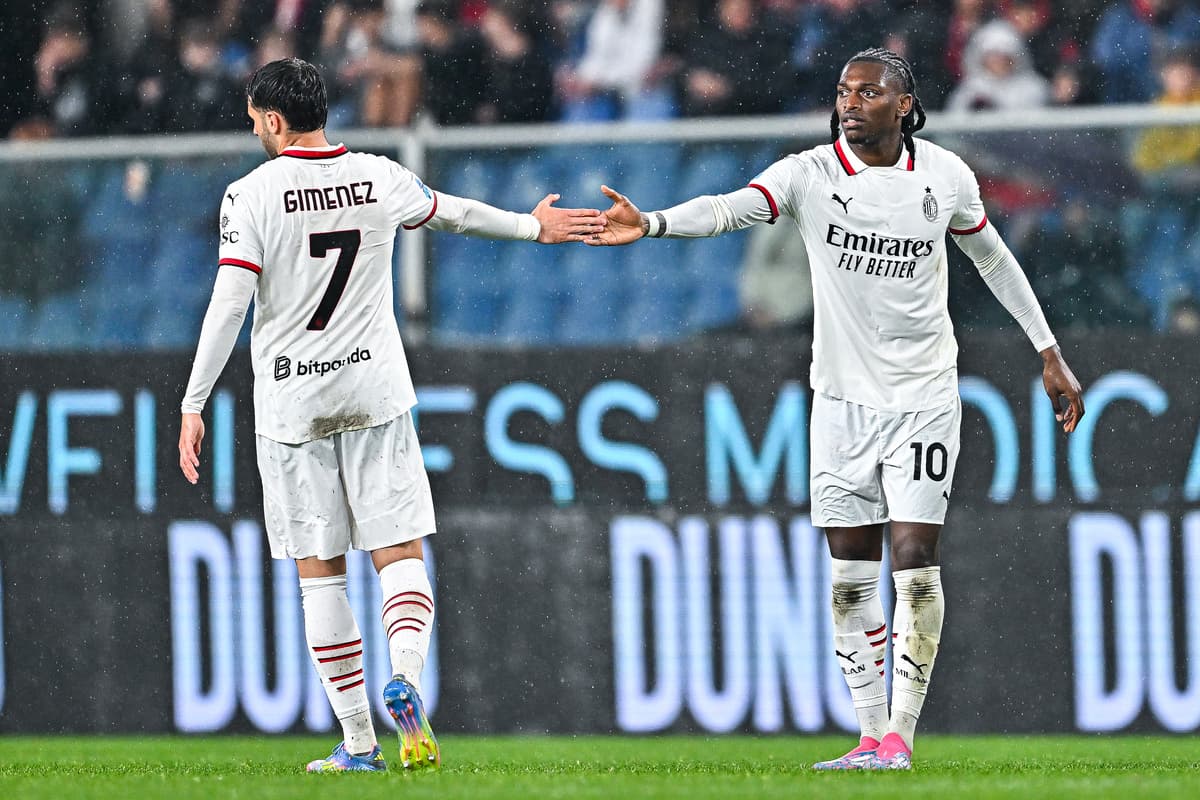
Genoa vs AC Milan: A Serie A Showdown Analysis
The afternoon at Stadio Luigi Ferraris closed with the kind of scoreline that tells a familiar Serie A story: a brave underdog undone 2–1 by a more polished contender. Following this result in Round 37, Genoa remain a mid-table survivor, 14th with 41 points and a goal difference of -9, their season defined by grind rather than glamour. AC Milan, by contrast, leave Genoa looking every inch a Champions League side, 3rd on 70 points with a goal difference of 19, their campaign built on control, economy and a ruthless away record.
Across 37 matches overall, Genoa have been a team of narrow margins. They have won 10, drawn 11 and lost 16, scoring 41 and conceding 50. At home they have been inconsistent: 6 wins, 4 draws and 9 defeats, with 22 goals for and 26 against. Their averages tell the same tale of fragility: 1.2 goals scored at home per match against 1.4 conceded. Milan’s profile is the mirror image. Overall they have 20 wins, 10 draws and only 7 defeats, with 52 goals scored and 33 conceded. On their travels they have been outstanding: 11 away wins, 5 draws and just 3 losses, scoring 28 and conceding 14, an away scoring average of 1.5 against only 0.7 conceded. This is a side built to travel, to suffer, and to win.
Team Tactics
Into that statistical tension stepped two very different tactical blueprints. Daniele De Rossi rolled out a 4-3-2-1, a narrow “Christmas tree” designed to thicken the middle and protect a defence that has already shipped 26 goals at home. J. Bijlow anchored the back line, shielded by a back four of M. E. Ellertsson, A. Marcandalli, S. Otoa and J. Vasquez. Ahead of them, M. Frendrup, Amorim and R. Malinovskyi formed a combative midfield three, with T. Baldanzi and Vitinha tucked in behind lone forward L. Colombo.
The selection betrayed both necessity and ambition. Genoa’s injury list stripped them of depth and variety: M. Cornet and Junior Messias, both out with muscle injuries, and B. Norton-Cuffy and J. Onana also sidelined, removed pace and ball-carrying from the flanks. L. Ostigard’s knock robbed De Rossi of a physically dominant defensive option. The result was a starting XI skewed toward central playmakers and hybrid midfielders, and a bench heavy with defensive cover and utility options like S. Sabelli, Aarón Martín and P. Masini rather than pure wide threats.
Milan, under Massimiliano Allegri, responded with a 3-5-2 that spoke of control and vertical punch. M. Maignan sat behind a back three of F. Tomori, M. Gabbia and S. Pavlovic, a unit built for aerial dominance and aggressive stepping into midfield. The quintet across the middle – Z. Athekame, Y. Fofana, A. Jashari, A. Rabiot and D. Bartesaghi – gave Allegri layers of passing angles and pressing triggers. Up front, S. Gimenez and C. Nkunku offered complementary movement: one stretching the line, the other dropping between spaces.
Disciplinary Dynamics
If Genoa’s shape was about survival, Milan’s was about suffocation. Heading into this game, Genoa’s season-long card data already painted them as a side that lives on the edge. Their yellow cards spike between 61-75 minutes with 25.40% of their cautions, a clear indicator of fatigue and late-game desperation. Milan, meanwhile, show their own disciplinary edge late: 25.81% of their yellows arrive between 76-90 minutes. In a match that finished 2–1, that overlapping volatility in the final half-hour was always likely to be decisive territory.
The absences only heightened those fault lines. Genoa’s missing wide men meant more responsibility on Malinovskyi and Baldanzi to progress the ball and carry risk. Malinovskyi, already one of Serie A’s most combative midfielders with 10 yellow cards this season, embodies that double-edged sword. His six goals and three assists make him Genoa’s primary creative and scoring threat from midfield, but his 36 fouls committed and readiness to contest every duel add to the team’s propensity for late bookings. Aarón Martín, on the bench, is another emblematic figure: 5 assists from left-back, 60 key passes and 11 successful blocks, but also a penalty miss on his record that underlines Genoa’s thin margin for error.
On Milan’s side, the disciplinary narrative was different but equally influential. P. Estupiñán, who has one red card this season and is among the league’s leading red-card recipients, was suspended through yellow cards. So too were R. Leao and A. Saelemaekers. The absence of Leao, Milan’s 9-goal, 3-assist talisman, stripped Allegri of his most direct outlet on the left. Yet Milan’s squad depth softened the blow: Christian Pulisic, another of Serie A’s leading attackers with 8 goals and 4 assists and a remarkable creative profile of 38 key passes, waited on the bench as a game-changing option despite his own blemish of a missed penalty this season.
Match Dynamics
That set the stage for the match’s key duels. The “Hunter vs Shield” battle was less about a single striker and more about Milan’s collective attacking machine against Genoa’s vulnerable defensive record. Heading into this game, Genoa conceded 1.4 goals per match overall, while Milan scored 1.4 overall and 1.5 away. The numbers pointed toward exactly the kind of contest that unfolded: Genoa could hope to nick a goal – their home scoring average of 1.2 suggested as much – but keeping Milan under two always looked a stretch.
In midfield, the “Engine Room” clash pitted Malinovskyi, Frendrup and Amorim against Rabiot, Jashari and Fofana. Rabiot’s role as enforcer-playmaker was central to Milan’s plan: break Genoa’s rhythm, then spring Gimenez and Nkunku into the half-spaces vacated by Genoa’s adventurous interiors. Without Cornet or Messias to relieve pressure in transition, Genoa’s counters were always likely to be shorter, more direct, and easier for Milan’s back three to read.
From a statistical prognosis, the 2–1 scoreline sits neatly within both teams’ seasonal DNA. Genoa rarely collapse at home but just as rarely shut opponents out; with only 4 home clean sheets and 8 home matches where they failed to score, they are more often involved in tight, low-scoring defeats. Milan, with 8 away clean sheets and only 4 away matches where they failed to score, are built to edge such games. Their overall goal difference of 19, built on 52 scored and 33 conceded, reflects a side that manages game states rather than chasing chaos.
Following this result, the narrative is clear. Genoa remain a team that can trouble anyone in moments, especially when Malinovskyi and Baldanzi find pockets between the lines, but their structural and disciplinary fragilities against elite opposition persist. Milan, even without suspended stars like Leao and Estupiñán, showcased the depth and tactical maturity of a side heading toward the Champions League. The numbers, the lineups and the absences all pointed in the same direction – and the 2–1 on the scoreboard simply confirmed what the season’s data had been whispering all along.
Related News
Frosinone vs Como Prediction: Key Stats and Betting Tips
Fiorentina vs Napoli Prediction: Key Stats and Betting Tips
AS Roma vs Inter: Serie A Showdown on 19 September 2026

Inter’s Dominance in 5–3 Win Over Udinese
AS Roma vs Inter Prediction: Key Stats and Betting Tips
Lazio and AC Milan Battle to a 2–2 Draw: Early Serie A Insights