
DR Congo Cancels Kinshasa Send-Off Amid Ebola Crisis
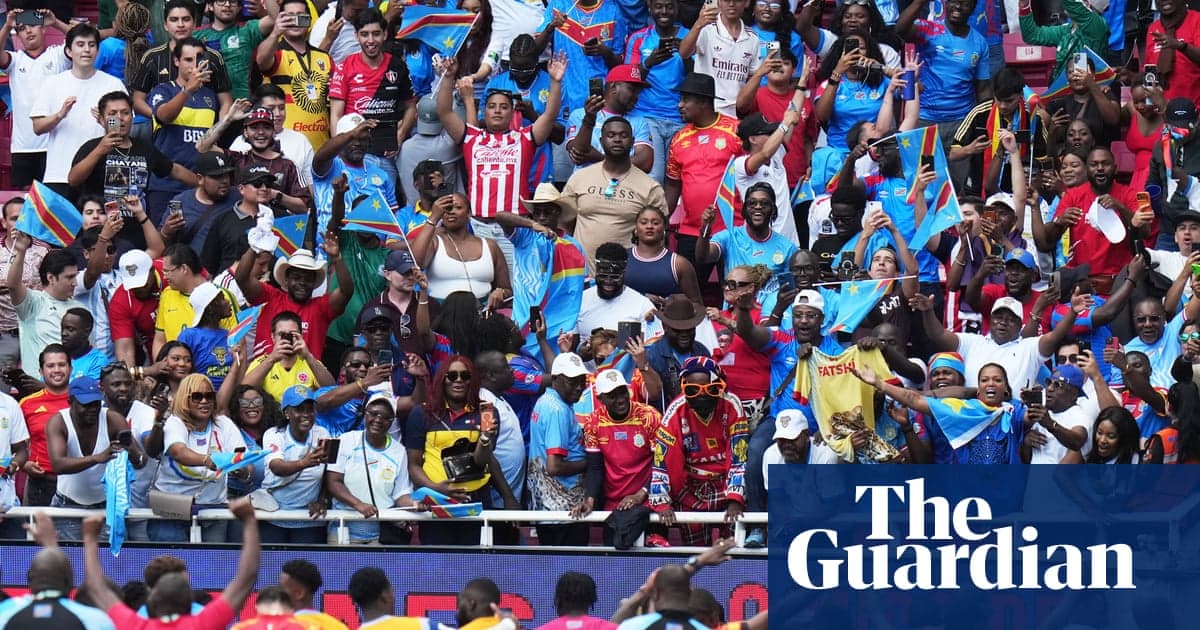
The Democratic Republic of the Congo should have been saying goodbye. Three days in Kinshasa, an emotional farewell in front of a capital that has waited half a century to see its team on the World Cup stage again. Instead, the plan has been torn up by a familiar national nightmare.
An outbreak of Ebola in the east of the country has forced the federation to cancel the Kinshasa camp and the public send-off, pushing Sébastien Desabre’s squad to complete their preparations entirely abroad. It is not just any Ebola strain either, but the rare Bundibugyo variant, linked to more than 130 deaths and nearly 600 suspected cases. The World Health Organization has labelled it a public health emergency of international concern.
So the Leopards will depart for the biggest month of their footballing lives without that roar from home. No packed stadium, no final ovation, no last glimpse of heroes in national colours.
“There were three stages of preparation: in Kinshasa to say goodbye to the public, Belgium and Spain with two friendly matches … and the third stage from 11 June in Houston. Only one stage was cancelled – the one in Kinshasa,” team spokesman Jerry Kalemo said.
The rest of the schedule holds. DR Congo face Denmark in Liège on 3 June, then Chile in southern Spain on 9 June. Both games are still on, Kalemo confirmed, before the squad flies to the United States for the final phase of their camp in Houston from 11 June. Their World Cup opens there on 17 June, against Portugal, in a Group K that also includes Colombia and Uzbekistan.
Health crisis in the background, football in the foreground. The balance is delicate.
Ebola reshapes the route, not the dream
One reason the sporting plan can continue: the squad live and work far from the outbreak. All of DR Congo’s players and their French coach, Desabre, are based outside the country, many of them in France. Staff members still in the DRC, Kalemo said, “are leaving in the next hours”.
Global authorities have moved quickly. Fifa has been in direct contact with the federation, Fecofa, saying it “is aware of and monitoring the situation regarding an Ebola outbreak and is in close communication with the DRC football association [Fecofa] to ensure that the team are made aware of all medical and security guidance.”
On the other side of the Atlantic, the United States has tightened its borders. The Centers for Disease Control and Prevention announced that all foreign nationals who have been in the DRC, Uganda or South Sudan in the previous three weeks will be barred from entering the country for 30 days.
That could have wrecked DR Congo’s World Cup. It hasn’t.
A US official clarified that the national team fall outside the ban because they have been training in Europe for several weeks. Players, coaches and officials who have not set foot in the DRC during the 21-day window will be allowed in as normal.
Those who did return home in that period will face quarantine requirements identical to those imposed on US citizens coming back from affected countries. The carve-out is narrow: it will not extend to fans hoping to travel to the World Cup from the region.
Behind the scenes, the White House World Cup taskforce, operating under the Department of Homeland Security, has underlined that it is “coordinating closely” with multiple agencies on health and security and is “closely monitoring” the outbreak.
The message is clear: the tournament will go ahead, but no one is taking chances.
First World Cup since Zaïre – and a brutal group
On the pitch, DR Congo arrive with history at their backs. This is their first World Cup finals since 1974, when the team played under the name Zaïre and were thrust into the global spotlight in West Germany. Generations have come and gone since then. The wait ended when they beat Jamaica in a playoff in Mexico to secure their ticket.
Now comes Group K. After Portugal in Houston on 17 June, the Leopards head to Guadalajara to meet Colombia on 23 June, then to Atlanta to face Uzbekistan on 27 June. It is a demanding itinerary, heavy on travel and altitude changes, for a side still learning the rhythms of tournament football.
Desabre’s 26-man squad carries a recognisable Premier League and European flavour. Newcastle forward Yoane Wissa brings cutting edge in attack, Sunderland midfielder Noah Sadiki offers legs and control in the middle, while West Ham full-back Aaron Wan-Bissaka adds defensive pedigree and one-on-one quality on the flank.
There has already been one setback. Hibernian centre-back Rocky Bushiri, initially named in the squad, has withdrawn with a suspected Achilles injury. His place goes to another Scottish Premiership player, Kilmarnock’s Aaron Tshibola, as Desabre reshapes his defensive options on the fly.
The margins are small at this level. Bushiri’s absence trims experience from the back line; Tshibola’s versatility adds something different. Desabre will have to settle those questions quickly in Belgium and Spain before the real scrutiny begins in Houston.
New power at Fecofa
While the national team adjusts its route, power has shifted at the top of Congolese football.
Véron Mosengo-Omba, the former general secretary of the Confederation of African Football (Caf), has been elected president of Fecofa. He stood unopposed and collected 60 of a possible 65 votes, completing a rapid return to national influence after stepping down from his Caf role in March following five years in that post.
Mosengo-Omba is no stranger to the game’s corridors of power. A university friend of Fifa president Gianni Infantino, he followed him from Uefa to Fifa in 2016, then moved to Caf in 2021. Now he takes charge of a federation steering a team into its most important month in decades while navigating a public health emergency at home.
The symbolism is striking. A new federation president with deep global connections, a national side back on the world stage, and a country once again wrestling with Ebola.
The farewell in Kinshasa will have to wait. The question now is whether, in a few weeks’ time, DR Congo can give their people something even bigger to celebrate.
Related News
Raphinha’s Hat-Trick Powers Barcelona to 7-2 Victory Over Racing Santander
Carabao Cup Fourth Round Draw: Liverpool Set to Clash with Chelsea, Arsenal to Face Fleetwood Town
Key Football Matches to Watch in Azerbaijan This Autumn
Raphinha's Hat-Trick Drives Barcelona to 7-2 Triumph Over Racing Santander
Hansi Flick Leads Barcelona to Record-Breaking Seven Wins in a Row
Gavi Reflects on Injury Return as Barcelona Dominate Racing Santander 7-2