
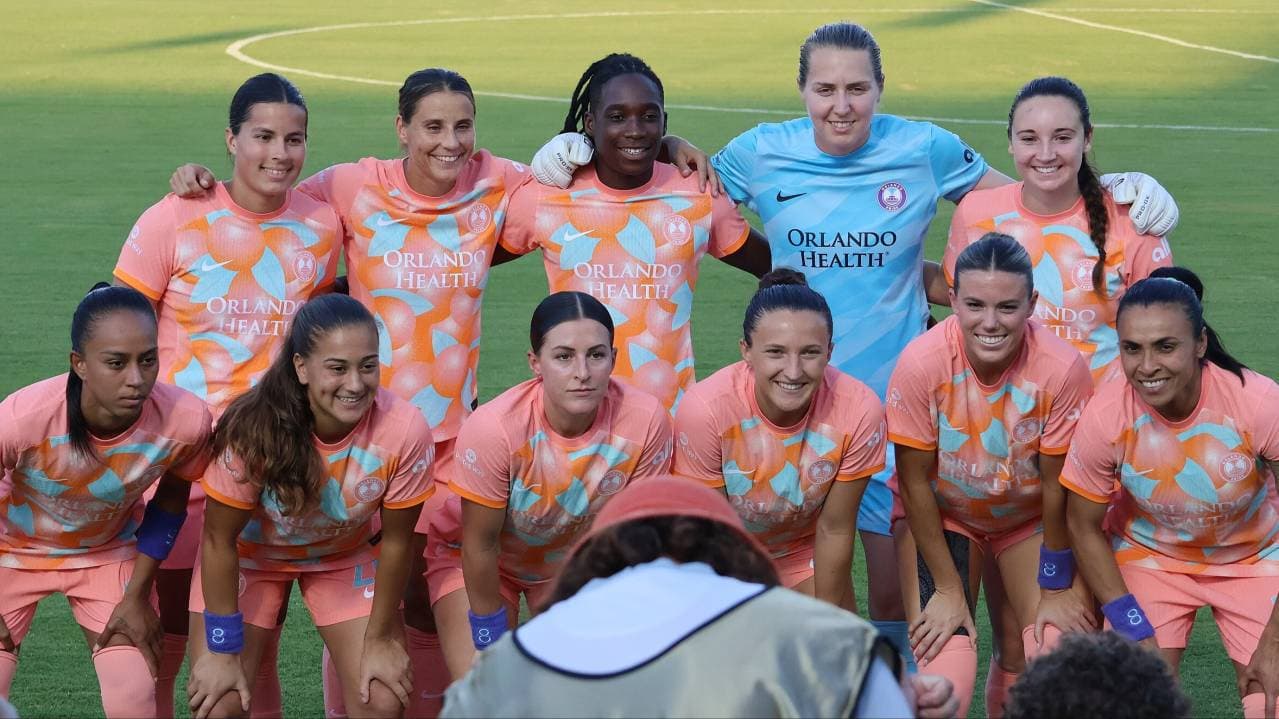
Denver Summit W Dominates Orlando Pride W in NWSL Clash
Under the thin Colorado night air at Centennial Stadium, Denver Summit W turned what looked like a tight, mid‑table NWSL Women clash into a statement performance, beating Orlando Pride W 3–1 after leading 1–0 at half-time. Following this result, the league table context sharpens the narrative: Denver, already 7th with 12 points and a +4 goal difference (15 scored, 11 conceded in total), underline why they are tracking towards the play-off spots, while 9th‑placed Orlando, on 11 points with a total goal difference of -2 (14 for, 16 against), continue a season defined by volatility.
I. The Big Picture – Summit’s structure vs Orlando’s star power
Orlando arrived with a clear identity: the only side in this fixture with a fixed formation in the data, a 4‑2‑3‑1 that has started all 10 league matches. Seb Hines stayed loyal to that shape again, building around the league’s most devastating finisher so far, B. Banda. With 8 total goals from 10 appearances, 39 shots (22 on target) and a 7.69 average rating, Banda is the pure “Hunter” in this narrative – a vertical threat whose duels (93 total, 39 won) and 24 dribble attempts make her the reference point for Orlando’s attack.
Denver, by contrast, are still listed without a set formation, but their seasonal DNA is clear. Heading into this game, they were balanced and efficient: 15 total goals from 9 matches, split evenly between home and away (5 at home, 10 on their travels), with identical scoring averages of 1.7 at home and 1.7 away. Defensively, they conceded 11 in total, just 4 at home, for a total average of 1.2 goals against per match and 1.3 at home. The 3–1 win here fits perfectly into that profile: a side that may not be spectacular on paper, but knows how to tilt tight contests.
Orlando’s overall numbers told a different story before kickoff. They scored 14 total goals (7 at home, 7 on their travels) at an average of 1.4 in every split, but conceded 16 in total, with 8 at home and 8 away, for a total and away average of 1.6. That negative defensive trend surfaced again in Commerce City, as the Pride’s back four, led by A. Moorhouse in goal and a line of O. Hernandez, C. Dyke, H. Anderson and H. Mace, could not contain Denver’s multi‑source threat.
II. Tactical Voids and Discipline – Edges in the margins
There were no listed absentees in the data, so both coaches effectively had full squads. The tactical voids, then, were structural rather than personnel-based.
For Denver, the disciplinary pattern is revealing. Heading into this game, 44.44% of their yellow cards arrived between 46–60 minutes, with another 22.22% in 76–90 and 22.22% stretching into 91–105 – a clear sign of a team that plays on the edge in the second half. They also carried a single red card in the 16–30 minute window, a reminder that their aggression can occasionally tip over.
Orlando’s card distribution is even more telling. Only scattered yellows early, but a spike between 61–75 minutes (30.77% of their yellows) and 23.08% from 76–90, plus a red card in the 61–75 band. This is a side that often loses control just as matches enter their decisive phase. In a game that finished 3–1, that tendency to fray in the final half-hour again felt like an invisible tactical absence.
On the individual side, Denver’s edge in controlled aggression is embodied by N. Flint and K. Kurtz. Flint, already on 3 yellow cards, is a combative midfielder who still maintains a 78% pass accuracy and contributes 3 goals and 2 assists. Kurtz, also on 3 yellows, anchors the back line with 470 total passes at 89% accuracy and 13 successful blocks – every one of those blocked shots a moment where she quite literally put her body in front of danger.
III. Key Matchups – Hunter vs Shield, Engine Room battles
Hunter vs Shield: Banda vs Denver’s defensive spine Banda is the league’s purest finisher in this contest, but Denver’s defensive record at home – only 4 goals conceded from 3 matches heading into this game – hinted that she would not find the same spaces she exploits elsewhere. The Shield here is not just Kurtz, whose 13 blocked shots and 13 interceptions underline her reading of danger, but also goalkeeper A. Smith and the wider defensive unit of A. Oke and E. Gaetino.
The 3–1 scoreline suggests Denver succeeded in forcing Banda into harder shots and more crowded zones. Her 24 dribble attempts and 93 duels total this season show she relishes chaos; Denver’s structure is built to reduce that chaos, and over 90 minutes, the Shield held firm often enough to allow their attack to win the day.
Engine Room: Ryan and Flint vs McCutcheon and Lemos If Banda is Orlando’s headline act, H. McCutcheon is their quiet heartbeat. Listed as a midfielder and one of the league’s top assist providers for Orlando, she has 2 total goals, 2 assists, 302 passes at 75% accuracy, and a defensive work-rate that includes 30 tackles, 6 successful blocks and 9 interceptions. She is the classic two-way “Enforcer”, tasked with screening the back four and starting transitions.
Across from her, Denver deploy two different creative axes. Y. Ryan, with 3 total assists and 15 key passes from 203 total passes at 79% accuracy, is the side’s primary chance‑creator, while also winning 31 of 72 duels and attempting 23 dribbles. Flint complements her with 8 key passes, 2 assists, and 15 tackles plus 2 blocked shots. Together, they form a dual‑pivot of invention and bite.
In this match, Denver’s midfield clearly tilted the balance. Orlando’s 4‑2‑3‑1 relies on McCutcheon and A. Lemos to hold the center, but Denver’s numbers all season – 223 total passes from Flint, 203 from Ryan – show a team comfortable circulating possession through its creative core. The 3–1 outcome is a narrative of those two gradually pulling Orlando’s double pivot out of shape, opening the half‑spaces for M. Kossler up front and wide runners like D. Sheehan and N. Means to exploit.
IV. Statistical Prognosis – Why the numbers always leaned Denver
Heading into this game, the raw metrics already shaded slightly towards the hosts. Denver’s total goal difference of +4 (15 for, 11 against) versus Orlando’s -2 (14 for, 16 against) suggested that, even if Expected Goals data is absent, their underlying balance between attack and defence was stronger. Both sides had scored at similar clips – 1.7 total goals per game for Denver, 1.4 for Orlando – but Denver conceded only 1.2 in total compared to Orlando’s 1.6.
Add in clean sheets – 3 in total for each side, but Denver with 1 at home from only 3 matches, Orlando needing 10 total games to reach the same overall mark – and the pattern emerges: Denver are more efficient at controlling game states, especially at home. Their penalty record also underlines composure: 1 total penalty taken, 1 scored, 0 missed, a small but telling margin in high‑pressure moments.
Orlando, for all Banda’s brilliance, are more volatile. Their biggest away win, 0–3, shows a high ceiling, but their heaviest away defeat, 3–1, mirrors exactly what happened at Centennial Stadium. When they concede first, their defensive average of 1.6 total goals against often swells.
Following this result, the tactical story feels coherent. Denver’s multi‑layered attack – with Kossler’s 3 total goals, Flint’s 3 goals and 2 assists, and Ryan’s 3 assists – proved more sustainable than Orlando’s reliance on a single, elite finisher. The Shield outlasted the Hunter, the Engine Room tilted in Denver’s favour, and the numbers that framed this fixture were ultimately reflected on the scoreboard.
Related News
Orlando Pride W vs Portland Thorns W: Playoff Showdown

San Diego Wave W vs Kansas City W Predicted Lineups: Team News for NWSL Women
Orlando Pride W vs Portland Thorns W Prediction: Key Stats and Betting Tips

San Diego Wave W vs Kansas City W: Key NWSL Clash Preview
San Diego Wave W vs Kansas City W Prediction: Key Stats and Betting Tips

Portland Thorns and Chicago Red Stars Draw in NWSL Showdown