
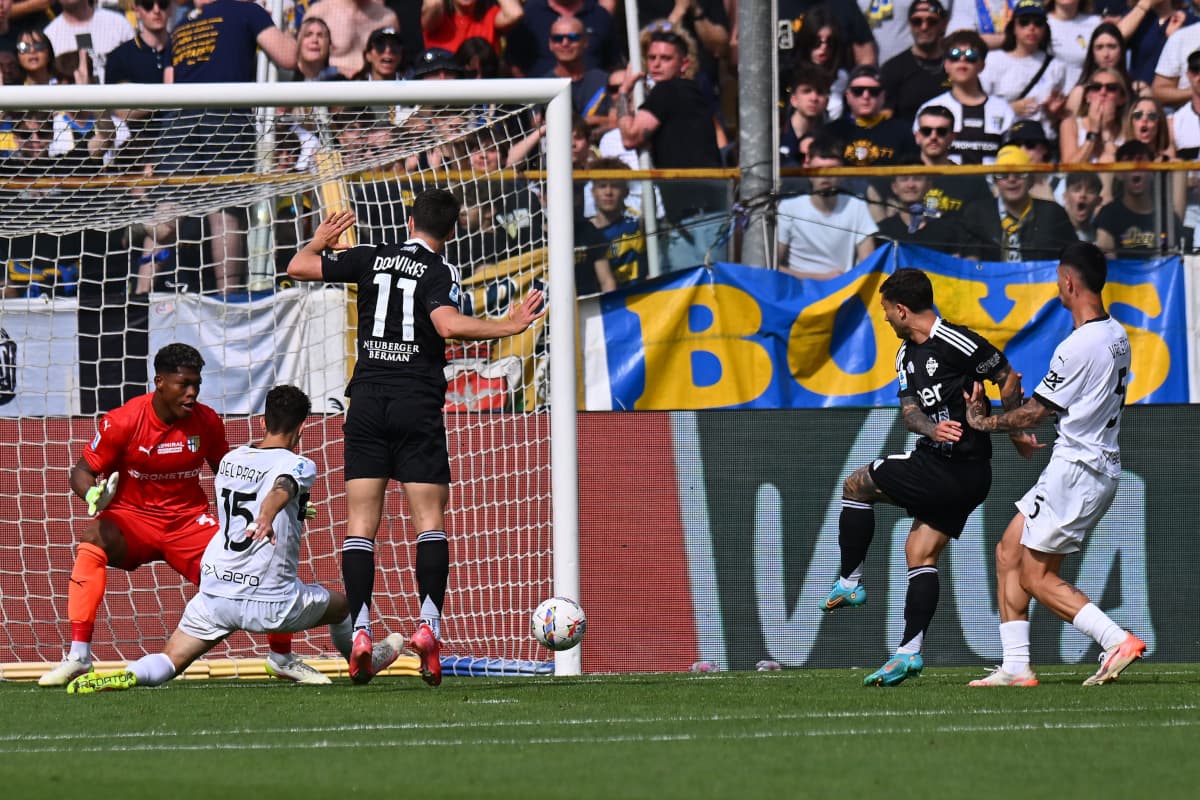
Como's Tactical Mastery Secures Victory Over Parma
On the banks of Lake Como, under the sharp spring light at Stadio Giuseppe Sinigaglia, this felt less like a dead‑rubber in Round 37 and more like a statement of intent. Following this result, Como’s 1–0 victory over Parma tightened their grip on 5th place in Serie A, a position built on a strikingly balanced seasonal profile: 19 wins, 11 draws, 7 defeats from 37 matches, with 61 goals for and 28 against, a formidable overall goal difference of +33.
Parma, by contrast, remain 13th with 42 points, their season defined by frugality going forward and fragility at the back: just 27 goals scored and 46 conceded overall, for a goal difference of -19. This fixture, and its narrow scoreline, mirrored those numbers: Como’s controlled superiority, Parma’s honest resistance, and a single decisive edge in both boxes.
I. The Big Picture – Fabregas’ Structure vs Cuesta’s Resistance
Cesc Fabregas stayed loyal to Como’s season-long blueprint, rolling out the 4‑2‑3‑1 that has been his default in 33 league games. J. Butez anchored the side in goal, shielded by a back four of I. Van der Brempt, Jacobo Ramón, M. O. Kempf and A. Moreno. Ahead of them, the double pivot of M. Perrone and L. Da Cunha gave structure, with a technically rich band of three – M. Caqueret, M. Baturina and A. Diao – working behind lone striker A. Douvikas.
This shape mirrors Como’s statistical DNA. Heading into this game, they averaged 1.6 goals per match in total, with a particularly sharp attacking edge at home where they scored 35 goals in 19 outings, an average of 1.8. Defensively, they conceded just 15 at home, 0.8 per game, supported by 10 home clean sheets and 19 in total. The 1–0 here was not an outlier; it was an affirmation.
Carlos Cuesta answered with a 3‑5‑2, a system Parma have used more than any other this season (18 times). Z. Suzuki started in goal behind a back three of A. Circati, M. Troilo and L. Valenti. The midfield five – E. Delprato, M. Keita, H. Nicolussi Caviglia, C. Ordonez and F. Carboni – was asked to compress space, while G. Strefezza and Mateo Pellegrino led the line.
Parma’s numbers framed the challenge. On their travels they had scored only 12 goals in 19 matches, an away average of 0.6, while conceding 21 (1.1 away). Their best hope was to drag Como into a low‑tempo game, lean on their 8 away clean sheets and trust the back three to absorb pressure.
II. Tactical Voids – The Absentees and the Card Shadow
Both coaches had to navigate notable absences. Como were without J. Addai (Achilles tendon injury), N. Paz (knee injury) and A. Valle (injury). The loss of Paz, in particular, stripped Fabregas of one of Serie A’s most complete midfielders this season: 12 league goals, 6 assists, 51 key passes and 86 shots total, with 48 on target. His creativity and ball‑carrying from deep are usually central to Como’s vertical surges.
Parma’s list was even longer. A. Bernabé (muscle injury), S. Britschgi (suspension after a red card), B. Cremaschi, M. Frigan, J. Ondrejka and G. Oristanio (all with serious injuries) were all missing. That cluster of absentees robbed Cuesta of rotation in both midfield and attack, forcing heavy minutes onto the likes of Pellegrino and Nicolussi Caviglia.
Disciplinary trends also hung over the contest. Como’s season card profile shows a pronounced late‑game edge: 20.25% of their yellow cards arrive between 61–75 minutes and another 20.25% between 76–90, with all of their red cards (three in total) flashing between 76–90. Parma, too, are volatile late on, taking 21.88% of their yellows between 46–60 and another 21.88% between 76–90, with red cards scattered across 31–45, 61–75, 76–90 and 91–105. This is a fixture primed for frayed nerves in the final quarter, and Fabregas’ decision to maintain a strong double pivot was as much about emotional control as tactical balance.
III. Key Matchups – Hunter vs Shield, Engine Room vs Enforcer
The “Hunter vs Shield” duel centred on A. Douvikas against Parma’s back three. Douvikas came into the round as one of the league’s most efficient forwards: 13 goals overall from 46 shots, 28 on target, plus 23 key passes and a penalty scored. His movement between the lines and ability to pin centre‑backs were essential to stretching a compact 3‑5‑2.
Opposite him, M. Troilo embodied Parma’s resistance. Across the season he has combined 25 tackles, 18 blocked shots and 16 interceptions with 792 completed passes at 89% accuracy. His reading of crosses and willingness to step out of the line were critical in trying to suffocate Como’s central combinations.
In midfield, the “Engine Room” duel pitted M. Perrone and M. Caqueret against H. Nicolussi Caviglia and M. Keita. Perrone’s numbers – 2111 passes at 91% accuracy, 56 tackles and 32 key passes – underline his dual role as metronome and destroyer. Caqueret, with 890 passes at 87% accuracy and 24 key passes, added progressive thrust and pressing intelligence.
Nicolussi Caviglia’s task was to disrupt that rhythm, while Keita provided legs around him. But without Paz’s risk‑taking, Como’s central trio became more about control than chaos: shorter circulation, rest‑defence ready for Parma’s counters, and a steady squeeze that wore the visitors down.
On the flanks, Van der Brempt and Moreno were given license to advance against Delprato and Carboni. With Parma’s wing‑backs pinned deep, Como’s full‑backs could create overloads with Baturina and Diao, forcing the Parma block to tilt and opening half‑spaces for Caqueret to exploit.
IV. Statistical Prognosis – xG, Control and the One‑Goal Margin
Even without explicit xG numbers, the season data points to a familiar pattern behind this 1–0: Como generating the higher Expected Goals through volume and territory, Parma surviving in moments but rarely threatening consistently.
Como’s overall attacking average of 1.6 goals per match, combined with Parma’s overall concession rate of 1.2, suggests a baseline xG edge in favour of the hosts. Factor in Como’s home defensive record – 0.8 goals against per match and 10 home clean sheets – against a Parma attack that averages only 0.6 away goals, and the likelihood of a Parma breakthrough was always slim.
The decisive narrative thread is that Fabregas’ side can now win in multiple registers. With Paz absent, they leaned on structure: the passing security of Perrone and Caqueret, the aerial dominance and 17 blocked shots of Jacobo Ramón, and the penalty‑box craft of Douvikas. Parma, stretched by injuries and suspensions, were forced into a reactive posture that their low scoring record could not overturn.
Following this result, Como look every inch a Europa League‑ready unit: tactically coherent, defensively tight, and capable of grinding out narrow wins when the spectacle dips. Parma, meanwhile, are left to ponder a season where their 12 clean sheets and disciplined 3‑5‑2 base could not fully compensate for a blunt attack and a negative goal difference that continues to define their ceiling.
Related News

Frosinone vs Como Prediction: Key Stats and Betting Tips

Fiorentina vs Napoli Prediction: Key Stats and Betting Tips

AS Roma vs Inter: Serie A Showdown on 19 September 2026

Inter’s Dominance in 5–3 Win Over Udinese

AS Roma vs Inter Prediction: Key Stats and Betting Tips
Lazio and AC Milan Battle to a 2–2 Draw: Early Serie A Insights