
Chattanooga Triumphs 3–1 Over FC Cincinnati II in MLS Next Pro
Under the lights of NKU Soccer Stadium, this MLS Next Pro group-stage contest unfolded as a study in contrasts: FC Cincinnati II, strong at home but fragile overall, against a Chattanooga side whose volatility has been matched by a knack for striking first. Following this result, Chattanooga’s 3–1 away win felt less like an upset and more like a confirmation of each side’s seasonal DNA.
Heading into this game, FC Cincinnati II sat 7th in the Northeast Division and 13th in the Eastern Conference, with 9 points from 10 matches and a goal difference of -7, built on 12 goals for and 19 against. At home they had been far more convincing: 3 wins from 5, 10 goals scored and only 7 conceded. Chattanooga arrived with promotion noise around them: 4th in the Central Division and 7th in the Eastern Conference, on 16 points with a goal difference of 2, having scored 18 and conceded 16 overall. On their travels, they had 2 wins and 3 losses from 5, with 8 goals scored and 7 conceded.
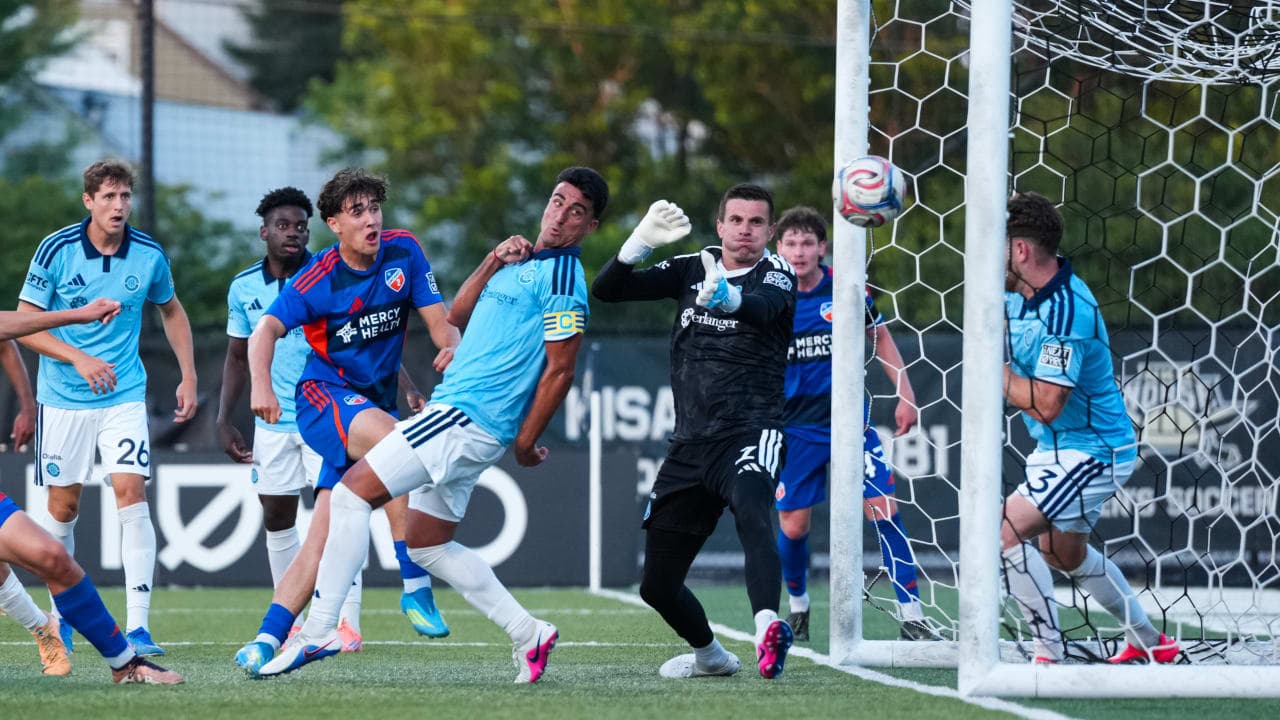
The first half told the story brutally. Chattanooga walked into the break 3–0 up, their early aggression and directness overwhelming a Cincinnati II side that never settled. The hosts did find a response after the interval, pulling one back to finish 3–1, but the damage had been done before the second half even began.
Tactical voids and discipline
With no official absentees listed, both coaches had their full squads available, yet the way the match unfolded suggested structural rather than personnel gaps.
For Cincinnati II, the season-long pattern has been stark: overall they concede 1.9 goals per match while scoring 1.2, but at home that flips into a high-variance identity – 2.0 goals for and 1.4 against on average. They are capable of explosive home performances, as evidenced by a biggest home win of 5–0 and a largest home defeat of 1–3, but that volatility leaves them exposed when the defensive block is not synchronized.
Their disciplinary profile hints at a side that often defends in emergency mode. Yellow cards are spread across the match, but the spikes at 0–15 minutes and 46–60 minutes (each 21.74% of their cautions) suggest early and early-second-half stress, when pressing triggers misfire or rest defense is poorly set. The single red card this season has come in the 76–90 range, a late-game flashpoint consistent with a team chasing or hanging on rather than controlling.
Chattanooga, by contrast, carry their chaos with more purpose. They have no draws in 10 matches, a pure win-or-lose profile that matches a form line of LWLLWWLLWW. Their defensive record is marginally better than Cincinnati II’s: 1.7 goals conceded per match overall, 1.6 away. But it is the rhythm of their aggression that stands out. Yellow cards cluster heavily between 31–45 minutes (27.27%) and then again from 61–75 and 76–90 (each 22.73%). This is a side that ramps up physicality as halves reach their climax, often to protect leads or disrupt opposition momentum.
Their red-card pattern is even more telling: both reds this season have arrived in the 61–75 and 76–90 windows (one each, 50.00% apiece), underlining how fine the line is between controlled intensity and overstepping. Yet in this match, Chattanooga navigated that edge effectively enough to build, then protect, a three-goal cushion by half-time.
Key matchups: Hunter vs Shield, Engine Room
With no individual scoring or assist data available, the “Hunter vs Shield” narrative becomes collective rather than focused on a single forward. Chattanooga’s attack, averaging 1.8 goals per match overall and 1.6 on their travels, came up against a Cincinnati II defense that concedes 2.4 goals per game away but a more respectable 1.4 at home. On paper, that suggested a balanced duel; on the pitch, Chattanooga’s front unit – led by the likes of D. Barker, D. Mangarov, and Y. Cohen – imposed their tempo early.
The Hunter won the opening exchanges emphatically. Chattanooga’s willingness to commit numbers forward from midfield, with S. Louis and L. Husakiwsky offering vertical support, repeatedly pulled Cincinnati II’s back line out of shape. Without a clear, settled formation listed, the home defensive structure felt improvisational: W. Kuisel and C. Holmes were often left managing wide overloads, while central protection in front of B. Dowd never fully materialized.
In the “Engine Room” battle, Chattanooga’s midfield trio outmaneuvered Cincinnati II’s central core of M. Sullivan, L. Orejarena, and D. Hurtado. Chattanooga’s season data points to a side that, while not watertight, controls key phases well enough to tilt matches: they have a biggest away win of 1–3 and a biggest away loss of 3–2, both scorelines that speak to open, transition-heavy games. This fixture followed that template, particularly in the first half when Chattanooga’s second balls and counter-pressing suffocated Cincinnati II’s attempts to build.
Cincinnati II’s best moments came after the break, when players like A. Chavez and M. Vazquez finally found pockets between Chattanooga’s lines. The home side’s season numbers support that capacity for late surges: they have failed to score at home in 0 matches, and their biggest home win of 5–0 underscores the attacking ceiling when rhythm is found. But chasing a three-goal deficit, their second-half improvement was more about pride than realistic comeback.
Statistical prognosis and what it means going forward
Following this result, the numbers behind both squads feel more entrenched than altered. Cincinnati II remain a home-reliant, high-variance outfit: in total this campaign they have 3 wins and 7 losses, with no draws, 12 goals for and 19 against. The goal difference of -7 is a precise reflection of a side that scores enough to stay interesting but concedes too much to be consistently competitive.
Chattanooga, meanwhile, continue to live on the edge but with a sharper blade. In total this campaign they have 5 wins and 5 losses, 18 goals scored and 16 conceded, for a goal difference of 2. Their away profile – 2 wins, 3 defeats, 8 goals for and 7 against – suggests they will not control every road match, but they have enough punch and structure to turn open contests into three points.
From an Expected Goals lens, even without raw xG values, the patterns are clear. Chattanooga’s season-long scoring rate of 1.8 per match against Cincinnati II’s concession rate of 1.9 hints that a multi-goal away output was statistically plausible. Conversely, Cincinnati II’s home scoring average of 2.0 versus Chattanooga’s away concession of 1.6 suggested the hosts would create and convert at least once – which they did.
The tactical preview for future meetings between these profiles is straightforward: if Chattanooga can again impose their early intensity and accept the disciplinary risk that comes with it, they will fancy their chances of punching holes in Cincinnati II’s structure. For Cincinnati II, any hope of reversing the narrative rests on tightening the early phases – where their yellow-card spikes betray stress – and giving their talented front line a platform before the match state turns desperate.
In MLS Next Pro’s unforgiving group stage, the margins are thin. This 3–1 result at NKU Soccer Stadium showed that Chattanooga, for now, are living closer to the right side of those margins, while FC Cincinnati II still search for a defensive baseline to match their flashes of attacking promise.
Related News

MLS Winners and Losers: Rising USMNT Star Cavan Sullivan, St. Louis City's Smart Moves, and Chicago Fire's Struggles Without Hugo Cuypers

MLS Highlights: Portland Timbers End Drought, Josh Sargent Shines, Cavan Sullivan Impresses
Tacoma Defiance vs Colorado Rapids II Stats: Head-to-Head Record

St. Louis City II vs Vancouver Whitecaps II: Head-to-Head Stats and Match Preview

Atlanta United II vs New York City II Stats: Head-to-Head Record
Houston Dynamo FC II vs Austin II Stats: Head-to-head Record