
Cagliari vs Torino: Tactical Analysis of Serie A Round 37
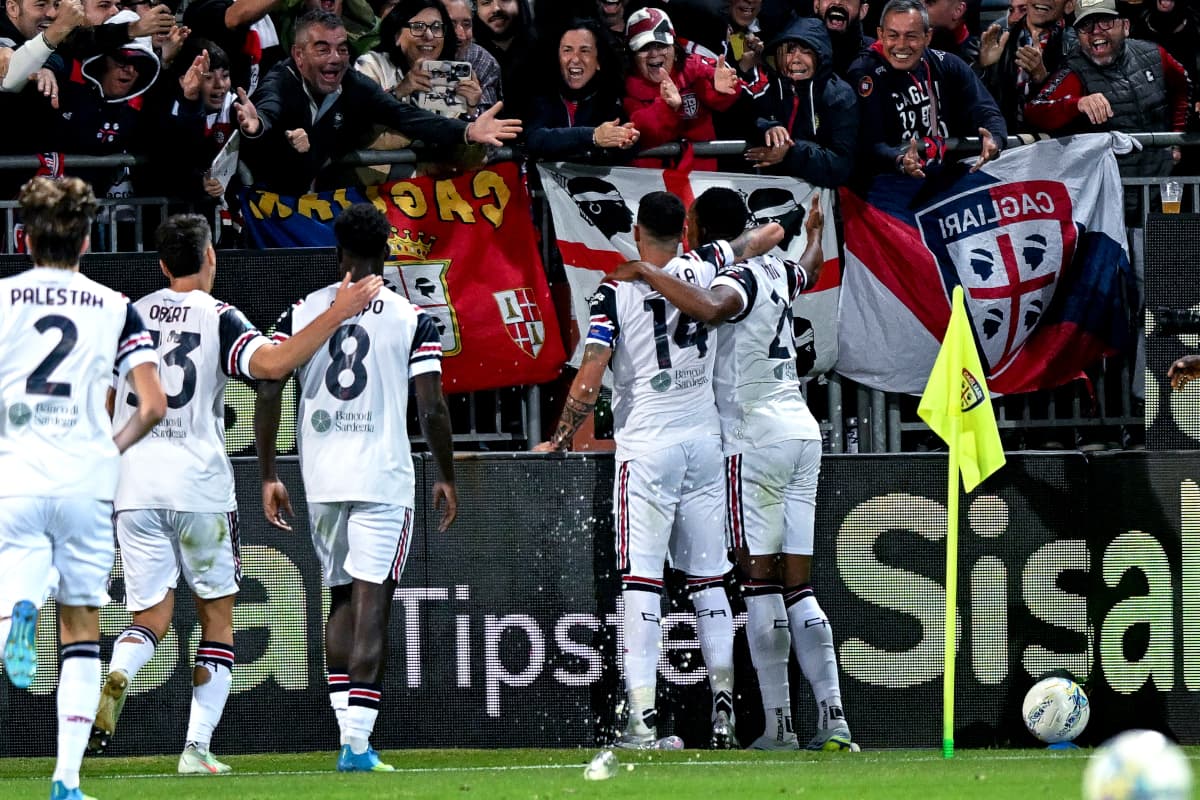
On a warm evening at the Unipol Domus, Cagliari and Torino walked out knowing that Round 37 of Serie A would shape the tone of their season’s epilogue. By the end of regular time, the scoreboard read 2–1 to Cagliari, a result that did more than just separate two mid‑table sides: it crystallised their contrasting identities and exposed the tactical choices that defined this campaign.
Heading into this game, Cagliari were 16th with 40 points and a goal difference of -14, built on 38 goals scored and 52 conceded overall. At home they had been a curious paradox: 22 goals for and 23 against across 19 matches, averaging 1.2 goals both for and against at the Unipol Domus. Torino arrived in 12th on 44 points, but with a harsher goal difference of -19, having scored 42 and conceded 61 overall. Away from home they had 17 goals for and 34 against over 19 games, averaging 0.9 scored and 1.8 conceded on their travels. This was not a clash of heavyweights, but of two teams trying to impose imperfect but distinct blueprints.
I. The Big Picture – Structures and Seasonal DNA
Fabio Pisacane’s decision to go with a 4‑3‑2‑1 underlined Cagliari’s late‑season shift towards a more balanced, ball‑secure structure. E. Caprile sat behind a back four of G. Zappa, Y. Mina, A. Dossena and A. Obert, with a compact midfield triangle of M. Adopo, G. Gaetano and A. Deiola. Ahead of them, M. Palestra and S. Esposito operated as dual attacking midfielders behind lone forward P. Mendy.
This was not a possession‑for‑possession’s‑sake side. Heading into this game, Cagliari’s season showed a team that often lived on fine margins: 10 wins, 10 draws, 17 defeats in total, with just 1.0 goals scored and 1.4 conceded per match overall. Yet at home, seven wins and six clean sheets suggested that when they controlled the central corridor and protected their box, they could drag games into their preferred attritional rhythm.
Leonardo Colucci’s Torino lined up in a 3‑4‑2‑1, consistent with a season heavily rooted in back‑three structures. A. Paleari was shielded by L. Marianucci, S. Coco and E. Ebosse, with a flexible four‑man band of M. Pedersen and R. Obrador as wing‑backs, and E. Ilkhan plus M. Prati inside. Ahead, G. Simeone and N. Vlasic floated behind D. Zapata.
Torino’s season numbers painted a side that oscillated between assertive pressing and defensive vulnerability. Overall they averaged 1.1 goals scored and 1.6 conceded, with 12 wins and 17 defeats. Away from home, four wins and seven clean sheets showed they could be pragmatic and compact, but the 34 goals conceded on their travels betrayed a tendency to collapse when stretched horizontally.
II. Tactical Voids – Absences and Discipline
The absentees shaped both benches and game plans. Cagliari were without M. Felici, R. Idrissi, J. Liteta, L. Mazzitelli and L. Pavoletti, stripping Pisacane of depth in wide and central attacking roles, and crucially of a classic penalty‑box reference in Pavoletti. The suspension of J. Pedro for yellow cards removed a creative and goalscoring pivot, forcing Cagliari to lean more heavily on Esposito’s playmaking and Mendy’s mobility.
Torino’s missing list was just as consequential. Z. Aboukhlal and A. Ismajli were out with muscle injuries, F. Anjorin with a hip issue, and G. Gineitis suspended through yellow cards. That thinned Colucci’s options both in the back line and in the half‑spaces, narrowing his ability to rotate or change the game’s attacking geometry from the bench.
Disciplinary trends added another layer. Heading into this game, Cagliari’s yellow cards peaked late: 27.85% of their cautions arrived between 76–90 minutes, with a notable late‑game red‑card spike as well (their only red cards coming in that same 76–90 window). Torino, by contrast, showed a more distributed pattern, but with a worrying cluster of yellows from 76 minutes onwards (20.00%) and a solitary red between 46–60 minutes. In a tight match, that propensity for late bookings made the final quarter‑hour a tactical minefield, especially for defenders like Obert, who had already amassed nine yellows and one yellow‑red across the campaign.
III. Key Matchups – Hunter vs Shield, Engine Room Battles
The headline duel was clear: G. Simeone, Torino’s leading scorer with 11 league goals, against a Cagliari defence that, despite conceding 52 overall, had been sturdier at home. Obert’s profile was central here. Across the season he had made 65 tackles, 18 successful blocked shots and 40 interceptions, anchoring the left side with a mix of aggression and anticipation. His duel numbers – 230 total duels, 123 won – underlined a defender comfortable stepping out to meet strikers like Simeone who like to receive on the half‑turn.
Simeone, for his part, brought volume and relentlessness: 58 shots (28 on target), 22 key passes and 50 dribble attempts. His role in the 3‑4‑2‑1 is not just as a finisher but as a pressing trigger and link‑man. The question was whether Torino could generate enough structured possession in the final third to feed him, given their away average of just 0.9 goals scored and Cagliari’s six home clean sheets.
In the “engine room”, the duel between Esposito and Torino’s central pair of Ilkhan and Prati framed the game’s rhythm. Esposito’s season had been quietly outstanding: 7 goals, 5 assists, 954 passes with 67 key passes and a 75% accuracy rate. He is Cagliari’s metronome and scalpel, equally capable of dropping deep to knit play and stepping into the half‑spaces to release the lone striker.
Ilkhan and Prati, by contrast, were tasked with compressing those spaces. Torino’s season‑long defensive record – 61 conceded overall, including 27 at home and 34 away – suggested that when their midfield screen was bypassed, the back three could be exposed. The 3‑4‑2‑1 demands that the double pivot be both destroyers and distributors; if they failed to contain Esposito between the lines, Torino’s central defenders would be dragged into uncomfortable zones.
IV. Statistical Prognosis – xG Logic and Defensive Solidity
Even without explicit xG numbers, the season data pointed towards a narrow, low‑margin contest. Cagliari’s overall scoring rate of 1.0 goals per game and Torino’s 1.1 suggested neither side was likely to run away with it. Defensively, Cagliari’s 1.4 goals against per match overall versus Torino’s 1.6 hinted that the home side were marginally more secure, particularly given their near‑par home record (22 for, 23 against).
Torino’s away profile was the real red flag: 17 goals scored and 34 conceded on their travels, nearly twice as many conceded as scored. That imbalance, combined with Cagliari’s seven home wins and eight home defeats, pointed towards a volatile but slightly Cagliari‑tilted xG landscape – the hosts more likely to create the higher‑quality chances, the visitors reliant on moments of individual quality from Simeone, Vlasic or Zapata.
Following this result, the 2–1 scoreline felt like the natural expression of those underlying numbers. Cagliari leveraged their home solidity and Esposito’s creative influence to edge ahead, while Torino’s structural frailties away from home again proved decisive. The hunter‑versus‑shield duel between Simeone and Obert encapsulated the night: the striker dangerous, the defender just resilient enough.
In narrative terms, this was not a statement win or a disastrous defeat, but a match that confirmed who these teams have been all season. Cagliari, imperfect but stubborn at home, grinding out just enough. Torino, ambitious in shape but undermined by defensive looseness on their travels. The tactical preview, written in their season’s numbers, played out almost exactly as expected on the pitch.
Related News
Frosinone vs Como Prediction: Key Stats and Betting Tips

Fiorentina vs Napoli Prediction: Key Stats and Betting Tips

AS Roma vs Inter: Serie A Showdown on 19 September 2026

Inter’s Dominance in 5–3 Win Over Udinese

AS Roma vs Inter Prediction: Key Stats and Betting Tips
Lazio and AC Milan Battle to a 2–2 Draw: Early Serie A Insights