
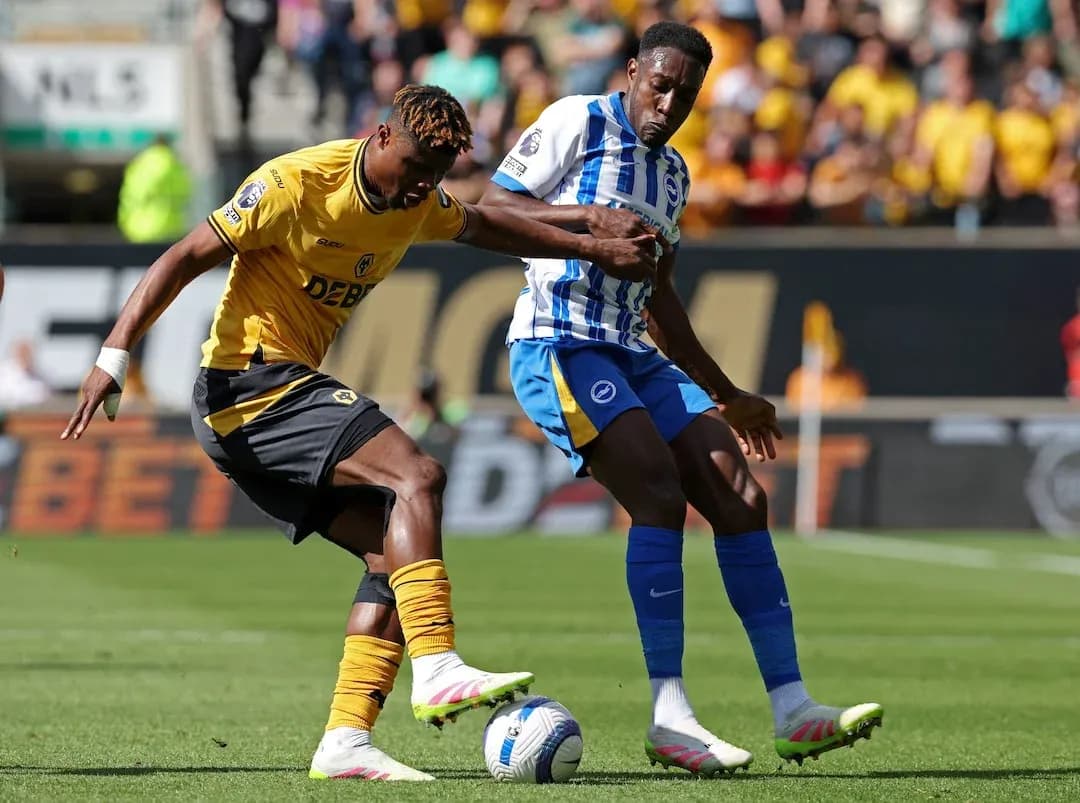
Brighton vs Wolves: Key Tactical Insights and Season Stakes
Brighton host Wolves at the Amex Stadium in a late Regular Season - 36 fixture that carries very different weights for each side. In the league phase, Brighton sit 8th on 50 points with a +7 goal difference (49 scored, 42 conceded), pushing for a strong top-half finish and an outside shot at European contention. Wolves arrive bottom in 20th with 18 points and a -38 goal difference (25 scored, 63 conceded) in the league phase, already locked in the relegation zone and effectively fighting for pride and momentum ahead of life in the Championship.
Head-to-Head Tactical Summary
The recent head-to-head record shows a finely balanced but high-variance matchup across league and cups. On 5 October 2025 at Molineux Stadium in the Premier League (Regular Season - 7), Wolves drew 1-1 with Brighton, having led 1-0 at half-time before being pegged back. On 10 May 2025, also at Molineux in the Premier League (Regular Season - 36), Brighton won 2-0, controlling the tie after going in 1-0 up at half-time.
At the American Express Stadium (Falmer, East Sussex) on 26 October 2024 in the Premier League (Regular Season - 9), Brighton and Wolves shared a 2-2 draw, with Brighton leading 1-0 at half-time but unable to close the game. Just over a month earlier, on 18 September 2024 in the League Cup 3rd Round at the same venue, Brighton edged a 3-2 win after a 2-1 half-time advantage, underlining the attacking volatility when these sides meet on the south coast.
In knockout football, Wolves have shown they can shut Brighton down: on 28 February 2024 in the FA Cup 5th Round at Molineux Stadium, Wolves won 1-0 after leading 1-0 at half-time, delivering a compact, defensive performance that contrasts with the more open league and League Cup encounters.
Global Season Picture
- League Phase Performance: In the league phase, Brighton’s 8th place is underpinned by 50 points from 35 matches, with 49 goals for and 42 against. Their home record is solid: 8 wins, 6 draws, 3 losses, scoring 27 and conceding 17 at the Amex. Wolves, in 20th, have 18 points from 35 games, with 25 goals for and 63 against in the league phase. Away from home they have yet to win: 0 victories, 5 draws, 12 defeats, with only 7 goals scored and 30 conceded.
- All-Competition Metrics: Across all phases of the competition, Brighton’s numbers mirror their league-phase output closely: 35 fixtures, 13 wins, 11 draws, 11 losses, with 49 goals scored (1.4 per game) and 42 conceded (1.2 per game). They have 9 clean sheets and have failed to score 7 times, typically lining up in a 4-2-3-1 (30 matches), occasionally shifting to 4-3-3 or 3-4-2-1. Their disciplinary profile shows a concentration of yellow cards between minutes 46-60 (24 yellows, 28.24% of their total), hinting at an aggressive post-interval press.
- Across all phases of the competition, Wolves’ structural issues are stark: 35 fixtures, 3 wins, 9 draws, 23 losses, with 25 goals scored (0.7 per game) and 63 conceded (1.8 per game). They have only 4 clean sheets and have failed to score in 18 matches, underlining a blunt attack (0.7 goals per game) and leaky defence (1.8 goals per game). Tactically they have cycled through multiple back-three and back-five systems (notably 3-4-2-1 in 10 matches and 3-5-2 in 9), suggesting ongoing attempts to patch defensive fragility without finding a stable solution. Their yellow cards cluster heavily between minutes 46-60 (21 yellows, 28.00%), similar to Brighton, but with added red-card risk across several time windows.
- Form Trajectory: In the league phase, Brighton’s recent form string “LWDWW” points to an upward trajectory: 3 wins, 1 draw and 1 loss in their last five, combining resilience with improved end-product. Wolves’ “DLLLD” in the league phase (3 losses, 2 draws) is consistent with their longer all-competition form line, which is dominated by extended losing streaks and only brief interruptions of draws or isolated wins. Momentum clearly favours Brighton, while Wolves arrive in a prolonged negative cycle.
Tactical Efficiency
Across all phases of the competition, Brighton profile as a proactive, moderately efficient attacking side: 1.4 goals scored per match against 1.2 conceded indicates a positive but not dominant goal balance, typically supported by a possession-based 4-2-3-1 and a willingness to commit numbers between the lines. Their clean-sheet count (9) and relatively low goals-against average (1.2) suggest a reasonably stable defensive structure when they control tempo, even if they are not elite at suppressing chances.
Wolves, by contrast, show a low attacking efficiency and a vulnerable defensive unit across all phases. Scoring only 0.7 goals per game while conceding 1.8 reflects an attack that rarely converts pressure into goals and a defence that allows sustained high-quality chances. Their multiple formation shifts (from 3-4-2-1 to 3-5-2, 3-4-3 and occasional back fours) underline a search for balance that has not translated into improved metrics. Any comparison of an “Attack/Defense Index” would place Brighton clearly ahead: their goal output is exactly double Wolves’ (1.4 vs 0.7), while their defensive record is substantially better (1.2 conceded vs 1.8), implying superior efficiency at both ends relative to their possession and xG profiles.
The Verdict: Seasonal Impact
This match is asymmetrical in stakes but still season-defining in tone. For Brighton, a home win would consolidate a top-half finish in the league phase and keep them within range of any late European-place openings created by other results. It would also reinforce the narrative of progress in 2026, validating their attacking approach and providing a platform for squad strengthening rather than rebuilding.
For Wolves, the result is less about survival – with 18 points and entrenched bottom-place metrics in the league phase, their relegation path is effectively set – and more about setting the competitive baseline for the Championship. A defeat would confirm their status as a clear outlier at Premier League level, underlining the need for a structural reset in attack and defence. A draw or rare away win, by contrast, would not change their league-phase destiny but could offer psychological and tactical proof that their evolving systems can at least stabilise performance before the drop.
Overall, the seasonal impact skews towards Brighton: three points here would frame the run-in as an opportunity to close the gap to the European conversation, while anything less would be a missed chance against the league phase’s weakest side and a warning sign about their ability to consistently convert superiority into results. For Wolves, the outcome will mainly shape the narrative and confidence with which they exit the division, rather than the table itself.
Related News

Tottenham vs Aston Villa Predicted Lineups: Team News for Premier League Clash
Brighton vs Arsenal: Premier League Clash Preview

Manchester City vs Sunderland: Premier League Clash Preview

Tottenham vs Aston Villa: Early Relegation Battle

Brentford vs Chelsea Predicted Lineups: Team News and Match Insights
Brighton vs Arsenal Prediction: Key Stats and Betting Tips