
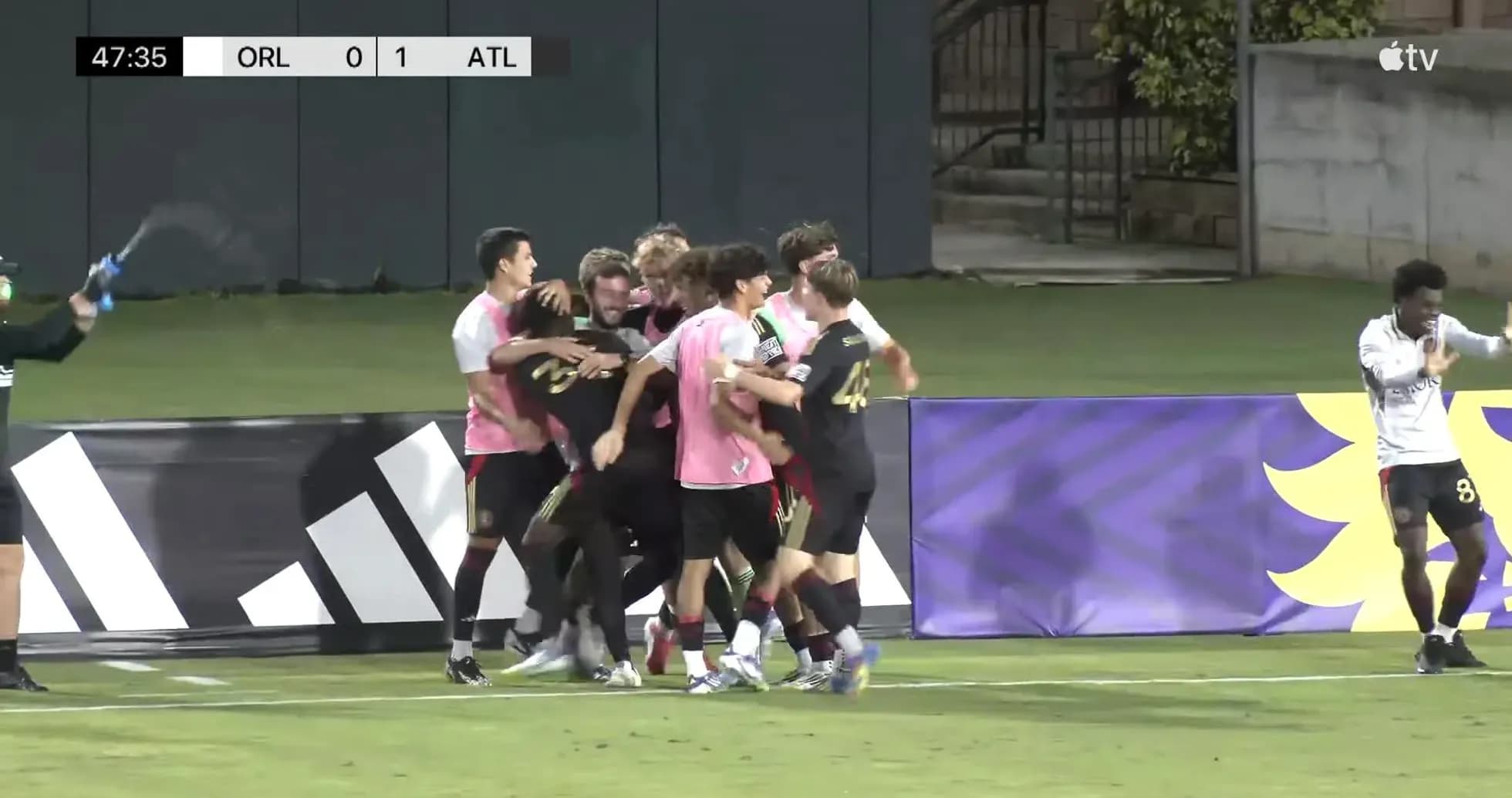
Atlanta United II vs Orlando City II: High-Stakes MLS Next Pro Clash
Atlanta United II host Orlando City II at Fifth Third Stadium in a high-stakes MLS Next Pro Group Stage clash in 2026, with both sides already inside the Eastern Conference play-off positions. In the league phase, Atlanta sit 4th in the Eastern Conference on 16 points (14 goals for, 9 against), while Orlando are 6th on 13 points (17 for, 19 against); this match is an early six-pointer that can either consolidate Atlanta’s top-4 push or allow Orlando to close the gap and tighten the play-off race.
Head-to-Head Tactical Summary
In 2025, the sides met three times in MLS Next Pro. On 23 August 2025 at Osceola County Stadium (Regular Season - 31), Orlando City II beat Atlanta United II 2-1 after a 0-0 HT, under referee Stephen Foster. Earlier that year on 25 May 2025 at Fifth Third Stadium (Regular Season - 14), Atlanta won 3-0 with a 2-0 HT lead, refereed by S. Berna Rico. On 16 March 2025 at Osceola County Stadium (Regular Season - 2), a 2-2 draw (HT 1-1) went to penalties, where Orlando prevailed 4-1 in a shootout overseen by A. Calume.
In 2024, they also met twice. On 23 August 2024 at Fifth Third Bank Stadium in Kennesaw, Georgia (Regular Season - 31), Orlando won 4-1 after leading 3-0 at HT, with M. Homa refereeing. On 26 June 2024 at Osceola Heritage Park in Kissimmee, Florida (Regular Season - 20), Orlando and Atlanta drew 2-2 (HT 1-0 to Orlando), before Orlando won 5-3 on penalties after a 0-0 extra time, again with A. Calume in charge.
Tactically, the pattern is clear: Orlando have repeatedly found ways to hurt Atlanta in transition and high-scoring games away from home (4-1 and 2-1 wins in Kennesaw), while Atlanta’s most convincing response was the 3-0 home victory in May 2025, when they controlled territory and converted early chances. Penalty shootouts have twice gone Orlando’s way, underscoring their edge in high-pressure moments.
Global Season Picture
- League Phase Performance: In the league phase, Atlanta United II are 2nd in the Central Division and 4th in the Eastern Conference with 16 points from 8 matches (5 wins, 0 draws, 3 losses), scoring 14 and conceding 9 (goal difference +5). At home they have 2 wins from 2, with 6 goals for and 2 against. Orlando City II are 3rd in the Central Division and 6th in the Eastern Conference with 13 points from 8 matches (5 wins, 0 draws, 3 losses), scoring 17 and conceding 19 (goal difference -2). Away from home they have 2 wins and 1 loss from 3, with 6 goals scored and 7 conceded.
- Season Metrics: Scope detection: team_statistics.games.played (8) matches standings.all.played (8), so this is a league-only dataset. All statistics below are In the league phase. For Atlanta United II, in the league phase, the attack is efficient but measured, averaging 1.8 goals per match (14 total: 6 at home, 8 away), while conceding 1.3 per match (10 total: 2 at home, 8 away). They have 2 clean sheets, both away, and have failed to score twice, also away, which underlines a strong home attacking profile (3.0 goals scored per home game, 1.0 conceded). Their disciplinary profile is aggressive late in matches, with yellow cards peaking between minutes 76-90 (5 yellows, 26.32% of their total) and notable red card risk between 46-60 and 76-90 (one red in each window). Orlando City II, in the league phase, are an open, high-variance side, averaging 2.5 goals scored and 2.5 conceded per match (20 for, 20 against; 13-13 at home, 7-7 away). They have neither a clean sheet nor a game where they failed to score, pointing to consistently open contests. Their biggest home win is 5-4 and biggest away win 3-2, while their heaviest away defeat is 3-1, again reflecting end-to-end football. Their yellow cards cluster before half-time (31-45: 5 yellows, 27.78%) and just after (16-30 and 46-60 both at 22.22%), indicating an aggressive pressing phase around the middle of each half.
- Form Trajectory: In the league phase, Atlanta’s form string is "WWWLL". They come into this fixture off two straight defeats after a three-game winning streak, suggesting a recent defensive tightening (9 goals conceded overall) has been offset by some regression in results. The earlier broader form in team_statistics ("LWWLLWWW") confirms a streaky side that can string wins together but also drop in short slumps. Orlando’s form string "LWWLW" shows 3 wins in their last 5 league games, with defeats punctuating but not derailing momentum. Combined with the longer "LWWWLWWL" pattern, they have generally been on an upward curve, with isolated setbacks rather than extended poor runs. The consistent scoring (20 goals in 8 games) supports a team whose attacking rhythm is stable even when results fluctuate.
Tactical Efficiency
With no explicit Attack/Defense Index values provided in the comparison block, efficiency must be inferred from In the league phase scoring and conceding patterns.
Atlanta United II’s profile points to a relatively balanced and controlled approach. Averaging 1.8 goals for and 1.3 against, they project as a compact side with a moderately efficient attack and a reasonably solid defense (goal difference +5 from 8 games). The stark home/away split – 3.0 goals scored per home match vs 1.3 away, and only 1.0 conceded at home – indicates that their "Attack Index" spikes significantly at Fifth Third Stadium, while their "Defense Index" is strongest in front of their own fans. The presence of 2 clean sheets, both away, also suggests that when they adopt a more conservative block, they can close games down effectively.
Orlando City II’s efficiency is more volatile but higher ceiling in attack. At 2.5 goals scored per game and 2.5 conceded, their "Attack Index" is clearly higher than Atlanta’s, but their "Defense Index" is weaker (goal difference -2 despite 5 wins). The fact they have not kept a single clean sheet and have not failed to score once underlines a tactical identity built around attacking risk and transitional play rather than defensive control. Their biggest wins (5-4 at home, 3-2 away) and biggest losses (3-1 away, 1-3 at home) reinforce this high-event style.
When mapped onto head-to-head outcomes, this contrast has historically favoured Orlando’s attacking volatility: they have scored 2 or more in four of the five listed meetings (2-1, 2-2, 4-1, 2-2), and even away from home they have produced 4-1 and 2-1 wins in Kennesaw. Atlanta’s best performance in this matchup – the 3-0 home win in May 2025 – came when they combined early attacking efficiency (2-0 at HT) with defensive control, mirroring their 2026 home metrics. For this upcoming game, the efficiency battle is between Atlanta’s structured home game and Orlando’s high-output but porous system; the side that can tilt the risk-reward balance (either by Atlanta raising their attacking tempo or Orlando tightening their back line) will likely own the tactical edge.
The Verdict: Seasonal Impact
From a seasonal standpoint, this fixture is a pivotal early checkpoint in both the title and play-off narratives of the Eastern Conference. In the league phase, Atlanta United II sit 4th with 16 points and a +5 goal difference, already in the zone marked for MLS Next Pro play-offs (1/8-finals). A home win would likely cement them as early contenders for a top-2 conference finish, stretching the gap over Orlando to 6 points and reinforcing Fifth Third Stadium as a high-yield fortress. That kind of buffer, combined with their superior defensive numbers (9 conceded vs Orlando’s 19), would give them margin for error in the upcoming schedule and allow more controlled rotation and game management.
For Orlando City II, currently 6th on 13 points with a -2 goal difference, the stakes are about staying attached to the upper tier rather than merely holding a play-off spot. A victory in Kennesaw would not only cut the gap to Atlanta but potentially flip the narrative: it would confirm that their high-scoring model can beat one of the conference’s more balanced sides away from home, strengthening their case as dark horses for a top-4 push rather than a lower-seed play-off team. Conversely, a defeat would deepen the structural concern around their defense, likely keeping them in the mid-table cluster where every slip risks falling toward the lower play-off seeds or even out of the top eight if rivals surge.
In forward-looking terms, this match is less about immediate elimination or qualification and more about shaping competitive tiers. Atlanta can use it to transition from "strong play-off contender" to "outside title challenger" in 2026, leveraging their defensive stability and perfect home record. Orlando can use it to prove that their attacking firepower is sustainable against elite conference opposition and not just in open, chaotic games. The result will heavily influence how both coaching staffs calibrate risk for the rest of the year: an Atlanta win likely reinforces a controlled, defense-first template, while an Orlando win would validate a high-tempo, attack-driven path toward the 1/8-finals and beyond.
Related News

MLS Winners and Losers: Rising USMNT Star Cavan Sullivan, St. Louis City's Smart Moves, and Chicago Fire's Struggles Without Hugo Cuypers

MLS Highlights: Portland Timbers End Drought, Josh Sargent Shines, Cavan Sullivan Impresses

Tacoma Defiance vs Colorado Rapids II Stats: Head-to-Head Record

St. Louis City II vs Vancouver Whitecaps II: Head-to-Head Stats and Match Preview

Atlanta United II vs New York City II Stats: Head-to-Head Record
Houston Dynamo FC II vs Austin II Stats: Head-to-head Record